
Continental Airlines: History, Routes, and What It Means for Travelers Today
Continental Airlines operated for nearly eight decades before merging with United Airlines. The airline served 140 destinations worldwide, built a loyal customer base through its OnePass frequent flyer program, and earned a reputation for strong international business class service. For travelers searching for Continental Airlines today, the short answer is simple: you book through United Airlines. But the full story is worth knowing.
Company Snapshot
-
Continental Airlines ceased to exist as an independent carrier after merging with United Airlines. The merger closed on October 1, 2010, and Continental's last flight operated on March 3, 2012.
-
Travelers looking to book flights on former Continental routes now do so through United Airlines, which operates many of the same hubs and similar routes from Newark and Houston.
-
Continental's premium BusinessFirst product evolved into United Polaris business class, featuring lie-flat seats and upgraded dining on long-haul flights.
-
Continental served 140 destinations across North America, Europe, Asia, and Latin America before the merger. United inherited much of that network.
-
Competing carriers like American Airlines and Delta Air Lines now fly similar routes from their own hubs, giving travelers alternatives on many former Continental city pairs.
Continental Airlines Merger with United Airlines
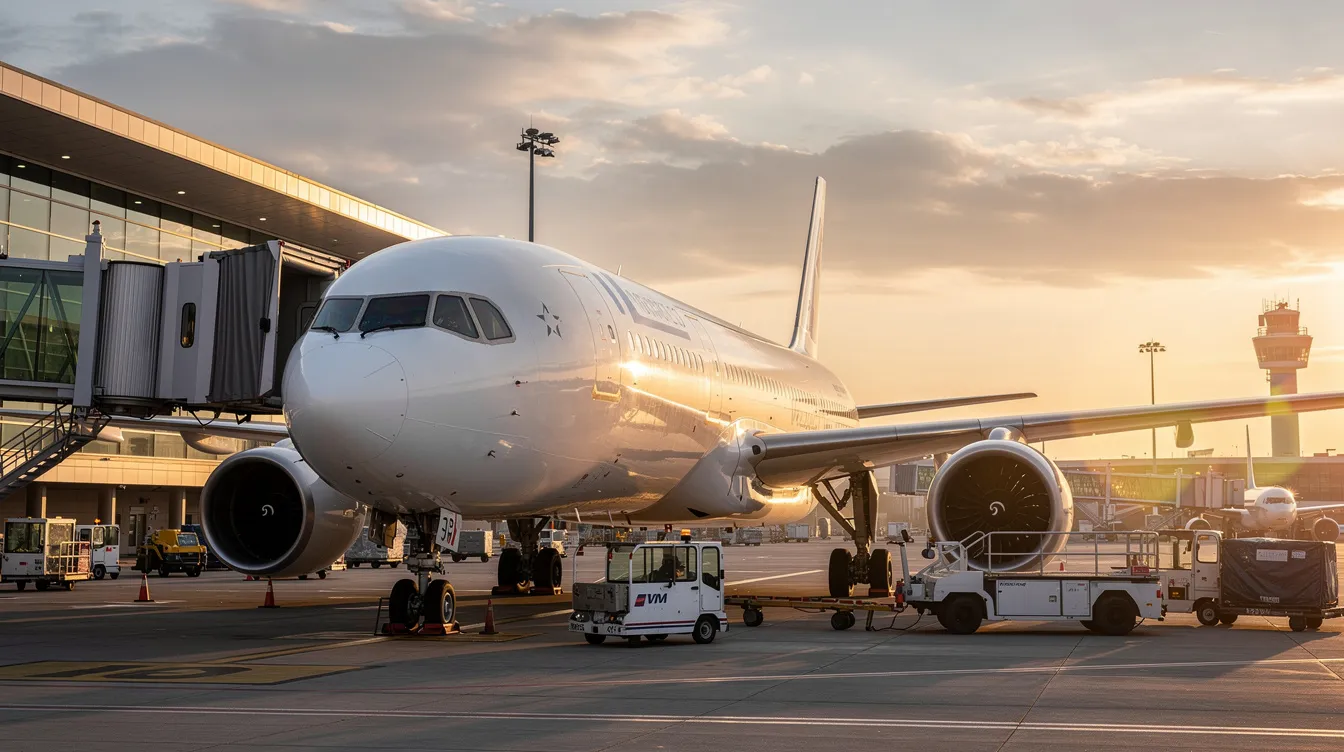
Continental and United Airlines announced an $8.5 billion merger on May 2, 2010. The deal was structured as a stock swap; Continental shareholders received 1.05 shares of UAL Corporation stock per Continental share. U.S. and European regulators approved the merger in summer 2010, and the transaction closed on October 1, 2010.
At closing, UAL Corporation was renamed United Continental Holdings. Continental's CEO Jeff Smisek became the CEO of the merged airline. The merger created the world's largest airline by revenue passenger miles at the time.
Here is a condensed timeline of the transition:
-
May 2, 2010: Merger announced; both boards approve.
-
October 1, 2010: Legal close. Continental and United merged under one airline holding company.
-
2011: Gradual migration of reservation systems, flight numbers, and employee integration.
-
March 3, 2012: Continental's last flight. All operations, booking codes, and the OnePass frequent flyer program were absorbed into United's MileagePlus system.
Continental Airlines' branding ceased, but its blue-and-gold globe logo was adopted by the combined airline and appeared on aircraft and signage for years. The merged carrier eventually refreshed branding with a new livery combining United's name with Continental's globe.
For travelers today, the practical effect is straightforward: you cannot book flights under the Continental Airlines name. Instead, you book flights via United Airlines for most of the same hubs and similar routes that Continental once operated.
To satisfy U.S. Justice Department antitrust concerns, United and Continental agreed to transfer 18 takeoff and 18 landing slots at Newark to Southwest Airlines. This was one of several concessions needed to complete the regulatory review.
Brief History of Continental Airlines
Continental Airlines was founded in 1934 as Varney Speed Lines and renamed Continental Airlines in 1937. The airline transitioned from a regional mail carrier to a major global airline over the course of seven decades.
Key milestones by era:
-
1930s–1940s: Varney Speed Lines launched small-route services in the American Southwest. After renaming to Continental Airlines, the carrier expanded domestic routes through the post-World War II period.
-
1960s–1970s: Jet-age growth. Continental added coast-to-coast routes and began positioning itself as more than a regional player.
-
1980s: Deregulation reshaped the U.S. airline industry. Continental Airlines filed for Chapter 11 bankruptcy multiple times in the 1980s and early 1990s. During this period, Continental absorbed People Express in 1987, along with Frontier Airlines and New York Air, adding routes and aircraft.
-
1990s: Continental Airlines rebounded under CEO Gordon Bethune in the mid-1990s, improving customer satisfaction through service investments and operational reforms. The turnaround took Continental from one of the worst-rated U.S. carriers to one of the most respected.
-
2000s: By the final decade of independent operation, Continental had built a reputation for strong long-haul service, particularly in its BusinessFirst cabins on international routes. The airline operated flights to Europe, Asia, and Latin America from its four hubs.
Hubs and Route Network
Continental developed a hub-and-spoke network that connected four primary gateways with destinations across the Western Hemisphere, Europe, and Asia-Pacific. After the merger, United Airlines inherited much of this structure.
Primary hubs and their roles
|
Hub |
Airport Code |
Primary Role |
|---|---|---|
|
Newark Liberty International Airport |
EWR |
Transatlantic gateway, East Coast domestic |
|
George Bush Intercontinental, Houston |
IAH |
Latin America, Caribbean, domestic corridors |
|
Cleveland Hopkins |
CLE |
Midwest regional feeder |
|
Guam |
GUM |
Micronesia and Western Pacific operations |
Continental's hubs were major in their respective regions. In 2009, the airline held approximately 72% of passenger share at Houston Intercontinental and about 68% at Newark, according to a GAO analysis of airline competition. Cleveland accounted for about 53% passenger share.
Network scope
At its peak in 2008, Continental and its regional affiliates served over 130 domestic and 132 international destinations with more than 2,400 daily departures. Continental offered the most U.S. flights to Germany and Japan among American carriers. The airline also began service to Mumbai, India on October 1, 2007, expanding its reach into South Asia.
Routes spanned cities across North America, central America, latin America, the Caribbean, Europe, and Asia. The Guam hub supported flights across Micronesia and the Western Pacific.
After the merger, United retained Newark and Houston as key hubs. Cleveland became a smaller focus city rather than a full hub operation. Guam operations continued under United branding.
How to Book Flights on Former Continental Routes Today
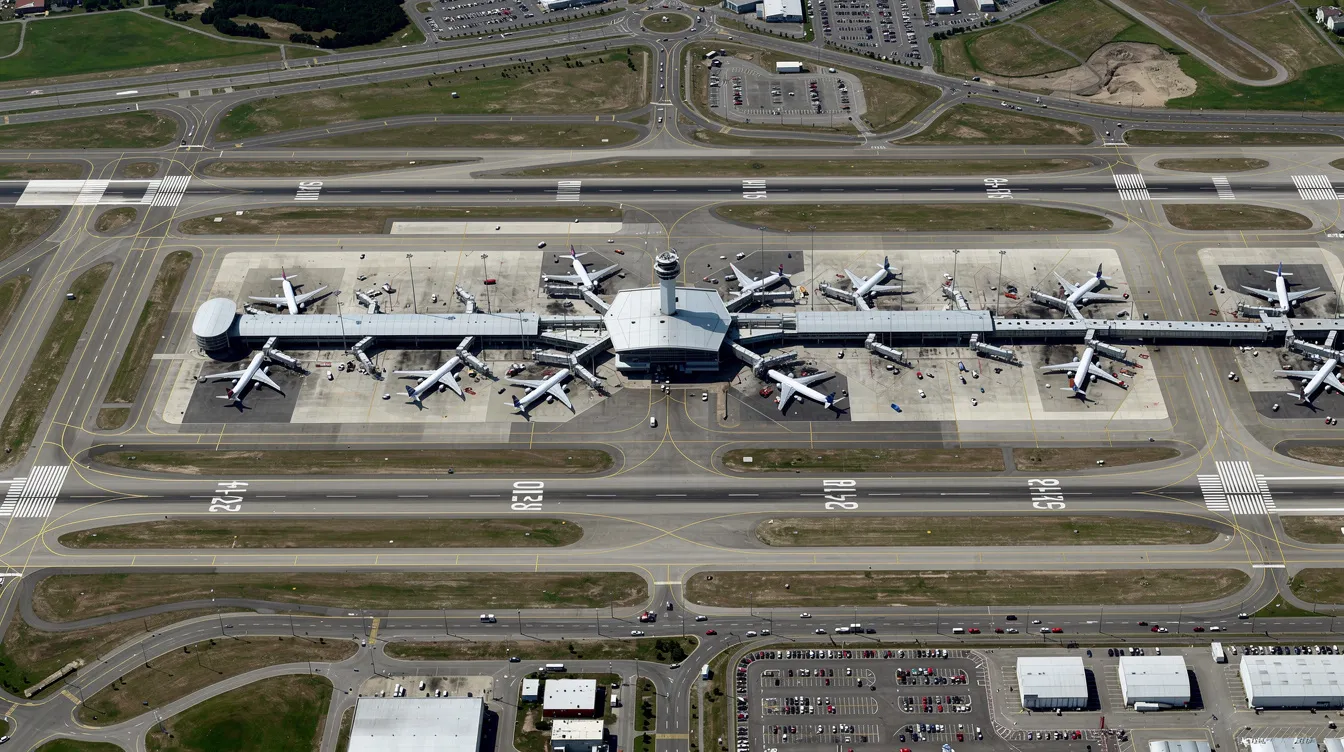
Continental flight numbers and the "CO" booking code no longer exist. To book flights on routes that Continental once operated, here is what to do:
-
Search for your origin and destination on the United Airlines website or mobile app. United operates under the "UA" code on all routes.
-
Compare cabin options. United offers economy, premium economy on select routes, and Polaris business class on long-haul international flights.
-
Check fares and schedules. Many former Continental city pairs from Newark and Houston are still served by United with similar or identical frequency.
-
Complete your purchase through United's booking system using a credit card or MileagePlus miles.
Some former Continental city pairs are now also served by other carriers:
-
American Airlines flies many overlapping transatlantic and transcontinental routes from JFK, Philadelphia, Miami, and Dallas-Fort Worth.
-
Delta Air Lines competes from Atlanta, JFK, and other hubs on similar routes.
-
Low-cost carriers serve some domestic segments that Continental once operated through regional affiliates.
To find the best option, search by city pair across multiple carriers and compare schedule, fare, and cabin type before you choose.
Cabin Classes: From Economy to BusinessFirst
Continental offered multiple cabin classes that varied by aircraft type and route. The two main categories were Economy and BusinessFirst (on international long-haul flights), with a domestic First Class on shorter routes.
Economy Class
-
Standard 3-3 seating on Boeing 737s for domestic and short-haul routes
-
2-4-2 or 3-3-3 configurations on widebody aircraft (767s, 777s)
-
Seat width between 17.2 and 17.9 inches on international aircraft; pitch around 31-32 inches
-
Complimentary snacks and meals on many international flights; buy-on-board options added on shorter domestic routes starting around 2010
BusinessFirst (International Business Class)
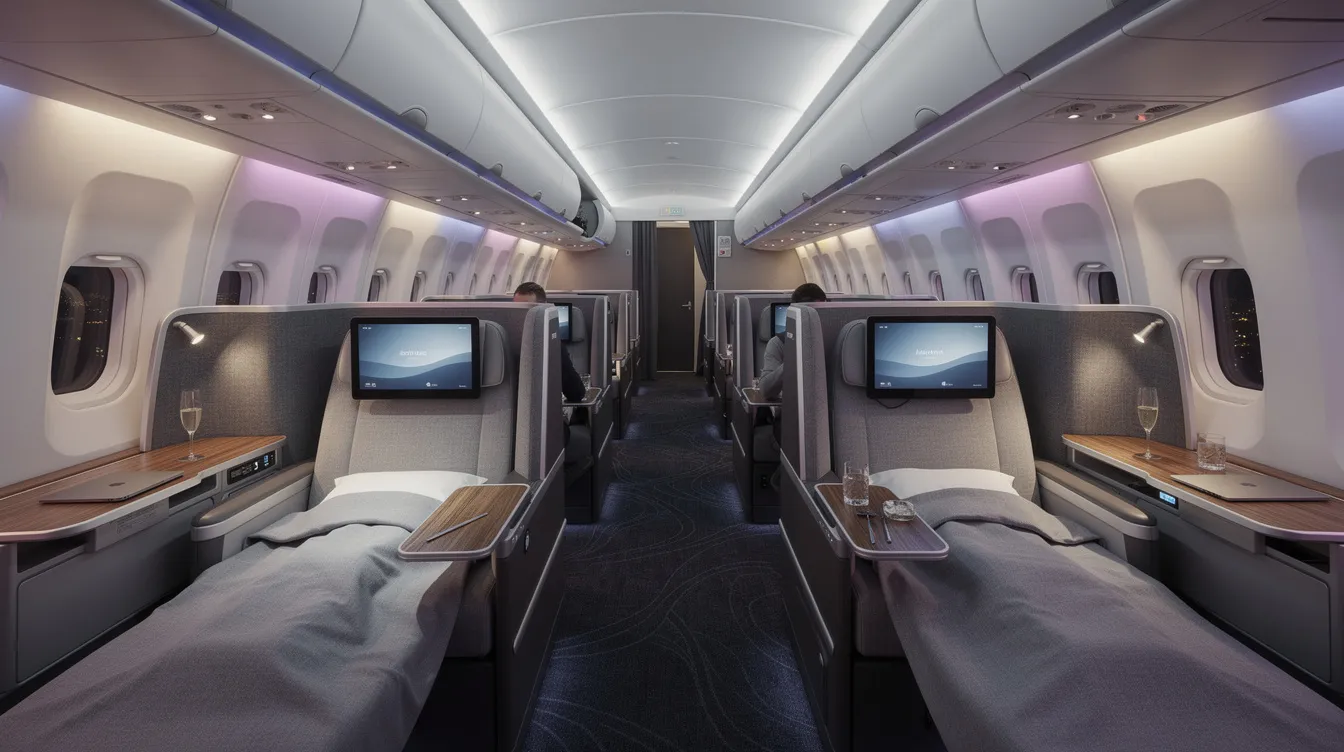
Continental's BusinessFirst cabin was a signature product on long-haul routes. Seats on Boeing 777-200ER and 757-200 aircraft could recline to a full 180-degree lie-flat position, offering approximately 78 inches (about 6.5 feet) of sleeping space. Seat width reached up to 25 inches with armrests aligned. Privacy shells, six-way adjustable headrests, and dedicated foot and leg rests were standard on many aircraft.
Domestic First Class
On domestic and shorter international routes, Continental's forward cabin offered seats with 20.75 to 21 inches of width and 37-38 inches of pitch. Complimentary meals and beverages, including alcoholic drinks, were included.
What replaced BusinessFirst
After the merger, United integrated BusinessFirst concepts into its premium cabins. The result is United Polaris business class, which serves long-haul routes with lie-flat beds, upgraded bedding, and enhanced dining. Travelers who remember BusinessFirst will find Polaris to be the direct successor on intercontinental flights from Newark, Houston, and other hubs.
Onboard Meal and Drink Service
Continental's meal service varied by cabin and route length. The airline maintained complimentary catering longer than some U.S. competitors, particularly in premium cabins and on international flights.
BusinessFirst dining
Continental offered complimentary meals on BusinessFirst flights, including multi-course hot meals on international routes. A typical service included a starter, main course, dessert, and cheese or fruit selection. Complimentary alcoholic beverages were part of the cabin offering. Premium ground services, including lounge access and priority boarding, accompanied the BusinessFirst ticket.
Economy service
Economy passengers received complimentary snacks on many flights. On transatlantic, transpacific, and longer Latin America and Caribbean routes, free meals and non-alcoholic drinks were standard. Passengers could purchase alcoholic beverages in economy class on most domestic and shorter international flights.
Changes before the merger
In 2010, Continental began phasing out free meals on domestic and Canadian flights under six hours. Buy-on-board options replaced complimentary catering on many shorter routes, while longer international sectors continued to receive full meal service.
United Airlines now sets current meal and drink offerings by cabin and route duration. Travelers booking today should check their specific itinerary on United's website for up-to-date service details.
Special Meals and Dietary Options
Continental offered special meal options for dietary restrictions on international flights, matching the practice of most global carriers. Available options included:
-
Vegetarian and vegan meals
-
Gluten-free meals
-
Kosher meals
-
Halal meals
-
Child meals
-
Allergen-friendly meals
These meals needed to be requested at least 24 hours before departure and were not automatically provided. After the merger, United Airlines continued offering special meals on select routes and cabins. Travelers must now request these through United's booking management tools or by contacting customer service.
In-Flight Entertainment and Connectivity
Continental progressively upgraded its in-flight entertainment over its final decade of operations.
Seatback systems
Many Boeing 757-200 and 777-200ER aircraft featured Audio-Video On Demand (AVOD) at every seat. Continental provided Audio-Video On-Demand on select aircraft, giving passengers control over movies, TV shows, and music. Older 767s carried earlier tape- or disc-based personal screen systems.
Live television
In January 2009, Continental began rolling out LiveTV satellite television via DirecTV on Boeing 737 Next-Generation and 757-300 aircraft. First-class passengers received free access. Economy passengers could click to activate it for $6 per flight.
Wi-Fi
In late 2009, Continental announced Gogo Inflight Internet for 21 Boeing 757-300 jets serving domestic routes. Access started at approximately $4.95 per session, with pricing varying by flight length.
Under United, these systems were gradually standardized. Today's travelers on similar routes experience newer streaming entertainment options and updated Wi-Fi products rather than the legacy Continental systems.
Frequent Flyer Program: OnePass to MileagePlus
Continental's frequent flyer program was called OnePass. Launched in 1987, the program allowed members to earn and redeem miles on Continental flights and partner airlines. Elite tiers included Silver, Gold, and Platinum, each offering benefits like free upgrades, lounge access, and bonus miles.
Continental's OnePass frequent flyer program was merged into United's MileagePlus program on March 3, 2012. Member miles, elite status, and account histories were transferred. Former OnePass members received unified MileagePlus account numbers.
Travelers who once had OnePass accounts now interact exclusively with MileagePlus. All earning and redemption happens through United Airlines and its Star Alliance partners. The structure of OnePass, including its tiered elite benefits, shaped parts of MileagePlus as it exists today.
Alliances, Codeshares, and Regional Partners
Alliances and partnerships extended Continental's network far beyond its own metal. Continental Airlines shifted its global alliance membership from SkyTeam to Star Alliance in 2009, aligning with United Airlines, Lufthansa, Air Canada, and dozens of other carriers for coordinated schedules and reciprocal loyalty benefits.
Regional operations
Continental Express and Continental Connection were regional brands operated by carriers like ExpressJet. These services used turboprops and regional jets to run feeder flights into hubs at Newark, Houston, Cleveland, and Guam, connecting smaller cities to the mainline network.
After the merger, these regional operations were rebranded into United Express. Continental employees who worked on these regional flights transitioned to the new branding. Flight attendants, pilots, and ground crews were eventually integrated under United's labor agreements, though the process took several years to complete across all work groups.
Fleet and Aircraft Types
Continental operated an all-Boeing mainline fleet during its later years. At the time the merger closed in October 2010, the fleet averaged 9.5 years in age.
-
Boeing 737 family (737-500, 737-700, 737-800, 737-900): Domestic routes and short-haul international flights to Latin America, Canada, and the Caribbean.
-
Boeing 757 (757-200, 757-300): Transcontinental services, transatlantic routes to Europe, and select Latin America flights. The 757-200 carried BusinessFirst on many international sectors.
-
Boeing 767: Mid-range international routes with two-class or three-class configurations.
-
Boeing 777-200ER: Long-haul flagship. Used on transpacific routes to Asia and select transatlantic services. Full BusinessFirst cabins with lie-flat seats.
Continental had placed orders for the Boeing 787 Dreamliner before the merger. Those jets were eventually delivered to United Airlines, which now flies them on many routes Continental once served.
By 2013, the combined fleet had been repainted in United Airlines livery. The Continental logos disappeared from fuselages, replaced by United's name and the inherited globe design.
Environmental Initiatives and Innovation
Continental invested over $12 billion in fuel-efficient aircraft and related equipment to reduce greenhouse gas emissions and airport noise. Several specific programs set the airline apart as an early mover on aviation sustainability.
Winglets and fuel efficiency
The airline reduced fuel burn by 3-5% with winglets installed across much of its Boeing fleet. Across thousands of daily flights, these savings added up to measurable reductions in carbon dioxide output per passenger mile.
Non-toxic surface treatment
Continental was the first to use non-chromium aircraft pre-treatment, adopting a product called PreKote that eliminated hexavalent chromium from the aircraft priming process. The EPA recognized Continental for this design-for-environment initiative, which reduced hazardous wastewater and improved worker safety.
Biofuel testing
In 2009, Continental conducted the first U.S. biofuel flight using a Boeing 737-800. One engine ran on a blend of 50% conventional Jet-A kerosene, 6% algae oil, and 44% jatropha-based oil. Continental's biofuel tests used a mix of algae and jatropha oil, and the results showed comparable performance to conventional fuel. The test contributed data to the U.S. Department of Energy's Commercial Aviation Alternative Fuels Initiative.
The airline was recognized by NASA for environmental contributions related to its sustainability programs. These initiatives were later adopted or expanded under United Airlines' environmental strategy, which continues to invest in sustainable aviation fuel and newer aircraft.

Comparing Continental's Network to Other U.S. Airlines
Continental as a brand is gone, but its former network lives on. Here is how the major U.S. carriers compare on routes that Continental once flew.
United Airlines inherited most Continental hubs and international routes. For travelers wanting the closest continuity in schedule, cabin product, and loyalty program, United is the primary successor. Flights from Newark and Houston to cities across the world follow much of the same network Continental built.
American Airlines competes on many transcontinental and transatlantic routes, particularly from New York JFK, Philadelphia, Miami, and Dallas-Fort Worth. On some former Continental city pairs in the Northeast, American may offer competitive pricing or more convenient schedules.
Delta Air Lines serves overlapping routes from Atlanta, JFK, and West Coast gateways. Low-cost carriers have also entered domestic segments that Continental once served through regional affiliates.
When comparing options, consider schedule frequency, frequent flyer program alignment, and cabin type. A traveler who values business class on a transatlantic flight from Newark will find United Polaris to be the direct descendant of Continental's BusinessFirst. Someone who prioritizes money savings or a different hub may find American or Delta a better fit on similar routes.
Travel Experience Legacy: Service Culture and Reputation
Continental Airlines was known for its strong operational performance and extensive domestic and international networks. The airline built a service culture in its final two decades that shaped passenger expectations at United.
In BusinessFirst, Continental maintained a crew-to-passenger ratio of about 1 flight attendant for every 8 passengers on long-haul flights. Ground services at hubs like Newark and Houston included dedicated BusinessFirst check-in counters, priority security lanes where available, and Presidents Club lounge access.
Continental employees across the system participated in a service turnaround during the Bethune era that emphasized on-time performance, baggage handling, and responsiveness to customer complaints. While United integrated staff, policies, and branding after the merger, parts of Continental's service approach carried into the combined carrier, especially on premium long-haul routes.
Safety Record, Accidents, and Incidents
Like all carriers with histories spanning decades and millions of flights, Continental experienced several notable safety incidents.
-
In 1978, a DC-10 (Flight 603) aborted takeoff at Los Angeles International Airport, overran the runway, and caught fire, resulting in six fatalities.
-
In 2006, Flight 1883 landed on a taxiway at Newark Liberty International Airport instead of the assigned runway. No injuries occurred, but the incident prompted FAA reviews of runway lighting and signage procedures.
-
In the Air France Flight 4590 Concorde crash on July 25, 2000, a metal strip from a Continental DC-10 on the runway caused the Concorde's tire to burst and rupture a fuel tank. A Paris court found Continental responsible and ordered damages.
These incidents contributed to industry-wide changes in procedures, pilot training, and materials management. United Airlines today operates under modern safety management systems that incorporate operational experience from both legacy carriers.
Continental's Role in the Global Airline Industry
Continental transitioned from a small regional carrier in the American Southwest to one airline with global reach spanning six continents. Its strategic position was built on three pillars.
First, the Newark hub gave Continental a strong foothold in the New York metropolitan area, the busiest air travel market in the world. Second, the Houston hub provided unmatched connectivity to Latin America and the Caribbean. Third, the Guam base supported niche Pacific operations that few other U.S. carriers could match.
The merger with United reshaped the competitive landscape. The combined carrier gained a network broad enough to fly passengers from virtually any U.S. city to destinations across the world without relying on codeshare partners. Continental's membership in Star Alliance, which it joined in 2009, complemented United's existing partnerships and created a more complete global offering for business and leisure travelers alike.
Continental's legacy continues to influence fleet decisions, route planning, and premium product development at United Airlines. The 787 Dreamliner orders that Continental placed before the merger now serve many of the long-haul markets the airline pioneered.
FAQ
Can I still book a flight with Continental Airlines today?
No. Continental Airlines ceased to exist as a separate brand after the merger with United Airlines. Continental's last flight operated on March 3, 2012. To fly routes that Continental once served, search and book through United Airlines. United continues to operate from continental's former hubs at Newark and Houston with many of the same destinations. Other carriers, including American Airlines and Delta, may also serve similar routes on some city pairs.
What happened to my old Continental OnePass miles?
OnePass was merged into United MileagePlus in 2012. Eligible miles and elite status were transferred to MileagePlus accounts at that time. If you believe you had an old OnePass account with a remaining balance, contact United Airlines customer service or log into MileagePlus online to check for linked profiles. Miles that were transferred should appear in your MileagePlus account history.
Which airline now operates Continental's BusinessFirst style business class?
United Airlines inherited and evolved Continental's BusinessFirst into United Polaris business class. Polaris is available on long-haul international flights and features lie-flat seats, dedicated Polaris lounges at select airports, upgraded bedding, and multi-course dining. When you book United business class on intercontinental routes, you are getting the modern successor to Continental's legacy premium product.
Are Continental's former hubs still important for air travel?
Newark Liberty International Airport and Houston Intercontinental remain major United Airlines hubs handling extensive domestic and international traffic. Cleveland Hopkins is now a smaller focus city with reduced service compared to its days as a Continental hub. Guam continues to serve as a Pacific outpost for United on regional routes across Micronesia.
Did Continental operate business class or first class on domestic flights?
Continental typically used a two-cabin layout on domestic routes, with a forward premium cabin marketed as First Class. Seats offered 20.75 to 21 inches of width and 37-38 inches of pitch, with complimentary meals and beverages. International long-haul flights featured BusinessFirst, which combined business and first class elements into a single premium cabin with lie-flat seats. Under United today, domestic premium cabins and Polaris business class cover that range of service.


