
Boeing 737: History, Generations, and Modern Variants
The Boeing 737 is a narrow-body twin-engine jetliner that has shaped commercial aviation for nearly six decades. Since Boeing began 737 design work on May 11, 1964, this aircraft family has grown from a modest short-haul concept into the best selling commercial aircraft program in aviation history. With typical seating capacity ranges from 85 to over 230 passengers depending on the variant, and a presence in airline fleets on every inhabited continent, the 737 remains a defining force in how the world travels.
This article traces the full story of the Boeing 737 family - from its 1960s origins through the four generations that followed and examines the new aircraft models available today.
At a Glance
-
The Boeing 737 family includes four generations: Original (-100/-200), Classic (-300/-400/-500), 737 Next Generation (-600/-700/-800/-900/-900ER), and the fourth generation 737 MAX (MAX 7/8/9/10). The Boeing 737 has undergone significant technological advancements over its history, and it has been in continuous production since the late 1960s.
-
Each generation series introduced advanced technology - more efficient engines, a redesigned wing, improved avionics, and aerodynamic improvements - progressively boosting operational efficiency, increased range, and higher seating capacity to keep the 737 competitive in the single aisle market.
-
The 737 MAX incorporates CFM LEAP-1B engines, advanced winglets, and flight deck upgrades that deliver approximately 10–12% better fuel efficiency versus the 737 Next Generation, while the NG series remains a major workhorse worldwide.
-
Dedicated Boeing Business Jet variants based on NG and MAX airframes offer bespoke, long-range corporate and VIP transport, extending the 737's role beyond standard airline operations.
-
This article follows the 737's history chronologically, details the major model families including cargo and special-mission types, and closes with a concise FAQ on practical topics like seating, range, and airport compatibility.

Origins of the Boeing 737 Concept (1960–1965)
In the early 1960s, the Boeing Company held strong positions in long-haul travel with the 707 and medium haul routes with the three-engine 727. But the short-haul segment - routes of 50 to 1,000 miles was dominated by other aircraft such as the Sud Aviation Caravelle, BAC One-Eleven, and Douglas DC-9. Boeing saw a clear gap in its product line.
Internal studies dating as far back as 1958 explored a twin-engined feeder airliner, initially envisioned as a small 50–60 seat jet to supplement the 727 on shorter sectors. However, customer feedback, particularly from European carriers, pushed Boeing toward a higher-capacity design of around 80–100 seats with competitive per-seat economics at short ranges. The 737 is designed primarily for short- to medium-haul routes, a philosophy established from these earliest studies.
Key figures shaped the program. Joseph Sutter, who would later lead design of the 747, and Jack Steiner brought deep experience from the 707 and 727 programs. Their design philosophy emphasized commonality with existing cabin fittings, structural simplicity, efficient engines, quick turnarounds, and the ability to operate into smaller airports - principles that would define the 737 for decades.
From Study to Launch: Program Approval and Early Design Choices
On February 1, 1965, Boeing's board formally approved development of the 737, committing roughly $150 million in 1960s dollars to the project. The 737-100 was the first model, launched in February 1965, marking the beginning of what would become aviation history's most prolific jetliner program.
During 1964–1965, the design evolved significantly. Early proposals featured a 5-abreast, rear-engined configuration with a t tail, but Boeing ultimately rejected this in favor of the now-iconic layout: six abreast seating in a low-slung narrow-body with engines mounted under the wing. The fuselage cross section was deliberately matched to the Boeing 727 - approximately 148 inches (3.76 m) in external diameter - to ensure compatibility with existing cabin fittings, galley equipment, and cargo containers.
The decision to target around 100 seats came after negotiations with potential airline customers like Lufthansa, who demanded competitive passenger capacity and comfort for European routes. Boeing's economic design targets were ambitious: high-frequency operations on short sectors with quick turnarounds and attractive break-even load factors compared to other aircraft of the era. The 737 is recognized for operational versatility allowing quick turnarounds, a trait engineered in from the very start.
Placing the Engines Under the Wing: A Defining Design Innovation
One of the most consequential decisions in the 737 program was Joseph Sutter's push to mount engines directly beneath the wing rather than at the rear fuselage. This single choice gave the 737 its distinctive silhouette and set it apart from competitors.
The technical rationale was compelling. Under-wing engines improved center of gravity balance, reduced drag by eliminating rear-mounted nacelles, and yielded a lighter empennage structure saving several hundred kilograms compared with a T tail configuration. Crucially, the arrangement also provided easier maintenance access at smaller airports lacking extensive facilities, a key advantage for regional operators.
The low fuselage and short landing gear simplified ground handling considerably. Baggage loading, fueling, and passenger boarding could proceed without jet bridges, which was essential for regional and developing markets where infrastructure was minimal.
Early concerns centered on foreign object debris ingestion due to the engines sitting close to the ground. Boeing drew on experience with the 720B and conducted extensive testing to demonstrate that FOD risks were manageable. Structurally, the design required a larger vertical fin and careful sizing of rudder authority to handle engine-out scenarios safely, along with thoughtful flap system integration - trade-offs that Boeing's engineers navigated successfully.
Heritage and Commonality with the Boeing 727
Extensive parts commonality with the 727 was a deliberate strategy that helped reduce development costs and accelerate the 737's path to market. Rather than starting from scratch, Boeing adapted proven systems from its existing narrow-body line.
Key shared elements included:
-
Cockpit layout philosophy and instrument panel organization
-
Numerous avionics and systems components
-
Major structural sections, including the forward fuselage and nose design
-
Cabin furnishings, overhead bins, and galley interfaces
For airlines already operating 707s and 727s, this meant reduced spare parts inventories, simpler maintenance procedures, and shortened crew familiarization periods. The mature, off-the-shelf components also boosted reliability from the outset.
However, this heritage came with a long-term downside. By the 1980s and early 1990s, legacy system architecture and structural decisions constrained how far Boeing could modernize the 737 without expensive redesign. It was only with the 737 Next Generation series that the company undertook the significant structural changes - new wings, stronger landing gear, modern avionics - needed to remain competitive.
Despite these constraints, the shared lineage created a consistent baseline that allowed each subsequent generation to retain pilot training and maintenance commonality while evolving substantially under the skin.
Prototyping, First Flight, and Early Certification (1967)
The first aircraft to carry the 737 designation was rolled out at Boeing's Seattle facilities on January 17, 1967. The prototype 737-100 made its maiden flight on April 9, 1967 - a milestone in aviation history - with test pilots Brien Wygle and Lew Wallick at the controls. That inaugural flight lasted approximately two and a half hours and focused on basic handling qualities, engine performance, and systems verification.
An intensive flight test program followed. Multiple prototypes accumulated roughly 1,000 to 1,300 flight hours, systematically expanding the performance envelope and validating systems across a wide range of conditions. Common issues discovered and resolved during testing included landing gear shimmy, thrust reverser behavior inherited from earlier Boeing designs, and minor refinements to ailerons, flaps, and the tail cone.
The 737-100 received FAA certification on December 15, 1967 - less than nine months after its first flight. This rapid certification timeline reflected both the maturity of borrowed 727 systems and the thoroughness of Boeing's engineering preparations.
The original prototype later served as a NASA research platform, underscoring the airframe's versatility even in its earliest form.

Launch Customers and Entry into Commercial Service (1967–1969)
Lufthansa became the launch customer for the Boeing 737 on February 19, 1965, placing an order for 21 aircraft and signaling strong European confidence in the new aircraft type. The first 737-100 was delivered to Lufthansa in December 1967, and revenue service began in early 1968 on short-haul European routes.
Despite Lufthansa's enthusiasm, the -100 found a limited market. Only 30 examples were ultimately built - 22 for Lufthansa, with the remainder going to Malaysia-Singapore Airlines and Avianca.
It was United Airlines that drove the creation of the aircraft that would truly define the Original generation. United's order, placed in April 1965, called for a stretched variant with more passenger capacity. The result was the 737-200, a stretched version of the 737-100 that featured additional fuselage plugs to accommodate roughly 115 to 130 passengers in typical layouts. The first 737-200 flew in August 1967 and entered commercial flight service with United in 1968.
The -200 quickly eclipsed the -100 in sales and established the 737 as a serious competitor in the short-haul market. Operators praised its dispatch reliability, rapid turn times, and economy of operation on high-frequency domestic US and intra-European sectors.
From Three-Crew to Two-Crew: Flight Deck Evolution and Operational Efficiency
The Boeing 737 was Boeing's first mainline jet certified from the outset for two-pilot operation - no dedicated flight engineer station required. This was a significant departure from the era's norm, when many commercial jets still carried three-person crews.
FAA evaluations conducted during the certification process in 1967 concluded that the 737's systems redundancy, instrument layout, and control architecture were sufficient for safe two-crew operations. This translated directly into lower operational costs: fewer salaries, reduced training requirements, and simplified crew scheduling.
Some US airlines initially resisted, preferring the familiarity of three-crew operations, and union negotiations over cockpit staffing continued through the 1970s and into the early 1980s. Eventually, regulators, operators, and labor organizations aligned on two-pilot standards that became the industry baseline.
Each subsequent generation series - Classic, 737 Next Generation, and 737 MAX - maintained the two-pilot flight deck model while integrating increasingly sophisticated avionics, glass cockpits, and automation. This crew commonality across four generations has been instrumental in reducing pilot training costs and enabling airlines to deploy crews flexibly across mixed 737 fleets.
First-Generation "Original" 737-100 and 737-200
The "Original" or first-generation series refers to the -100 and -200 models, both powered by Pratt & Whitney JT8D low-bypass turbofan engines producing approximately 14,000 pounds of thrust each. These were the first aircraft to carry the Boeing 737 name into commercial service.
Key technical specifications for the Originals:
|
Feature |
737-100 |
737-200 |
|---|---|---|
|
Typical seating |
85–100 (single class) |
115–130 (single class) |
|
Length |
~94 ft (28.65 m) |
~100 ft (30.5 m) |
|
Range |
~1,150–1,500 nm |
~1,500–2,000 nm |
|
Service ceiling |
~35,000 ft |
~35,000 ft |
|
Units built |
30 |
~1,114 |
The 737-200 evolved into the "Advanced" variant starting around 1971, incorporating aerodynamic refinements, more powerful JT8D engine options, and improved brakes that yielded approximately 15% gains in payload-range performance. Quick-change (QC) and Combi variants added flexibility for mixed passenger-cargo operations.
Through the 1970s and 1980s, Originals served high-frequency shuttle operations and routes into airports with limited infrastructure. Many were later converted into cargo aircraft or specialized government transports before retiring from frontline passenger service, with production of the -200 continuing until August 1988.
Second-Generation 737 Classic Family: -300, -400, and -500
The 737 Classic generation series introduced in the early 1980s was Boeing's answer to rising fuel prices, tightening noise regulations, and growing competition from Airbus. This generation series introduced the CFM56-3 high-bypass turbofan engine, fundamentally transforming the 737's economics.
The CFM56-3 delivered dramatically better fuel efficiency and lower noise than the JT8D, but its larger fan diameter posed a challenge: the 737's characteristically low ground clearance. Boeing responded with the now-famous flattened lower engine nacelles - an engineering compromise that became a visual signature of the Classic and later series.
The three main variants served distinct market segments:
-
737-300: The baseline Classic, seating roughly 110–150 passengers, with the first flight in February 1984 and entry into service with USAir that same year
-
737-400: A stretched, higher-capacity variant accommodating up to approximately 168 seats in dense layouts
-
737-500: The smallest variant in the Classic family, replacing the -200 on thinner routes while retaining modern systems, seating 100–120 passengers
Classic models served short- to medium-range commercial aviation routes worldwide, and approximately 1,988 units were built across all three variants. Winglet retrofits became available later in the Classic's service life to improve fuel efficiency further, but by the late 1990s many airlines began replacing Classics with the 737 Next Generation and Airbus A320 family aircraft.
Third-Generation 737 Next Generation: -600, -700, -800, -900 and -900ER
The next generation series, launched in November 1993 and commonly known as the 737NG, represented Boeing's most ambitious 737 upgrade to date. Designed to compete directly with the Airbus A320 series, the 737 Next Generation introduced sweeping changes while preserving the family's core identity.
Structurally, the NG featured a redesigned wing with increased span (approximately 117 ft 5 in), greater area, and greater fuel capacity - enabling longer range and improved performance at altitude with a design ceiling of 41,000 ft. The strengthened landing gear supported higher maximum takeoff weights, expanding payload-range flexibility.
The CFM56-7B engine delivered around 7% better fuel efficiency than the Classic's CFM56-3, with improved climb performance and lower noise. The 737-800 consumes 7% less fuel than competitors in its class and can fly 260 nautical miles farther than earlier models, establishing it as the high-capacity workhorse of the NG line.
The principal next generation models include:
|
Model |
Role |
Typical Seating (two class) |
Length |
|---|---|---|---|
|
737-600 |
Smallest variant, replacing -500 |
~108–132 |
~33.6 m |
|
737-700 |
Medium-size |
~125–145 |
~33.6 m |
|
737-800 |
High-capacity workhorse |
~160–189 |
~39.5 m |
|
737-900ER |
Extended range, highest capacity |
~180–220 |
~42.1 m |
Avionics took a generational leap with a glass cockpit featuring six large LCD screens and optional dual Head-Up Displays. The later introduction of the Boeing Sky Interior - with sculpted sidewalls, LED mood lighting, and larger overhead bins elevated the passenger cabin experience to match wide-body standards.
Southwest Airlines, one of the world's largest 737 operators, built much of its network around the NG family, demonstrating the platform's suitability for high-frequency, point-to-point airline operations.
Fourth-Generation 737 MAX Family: MAX 7, MAX 8, MAX 9, MAX 10 and High-Density Variants
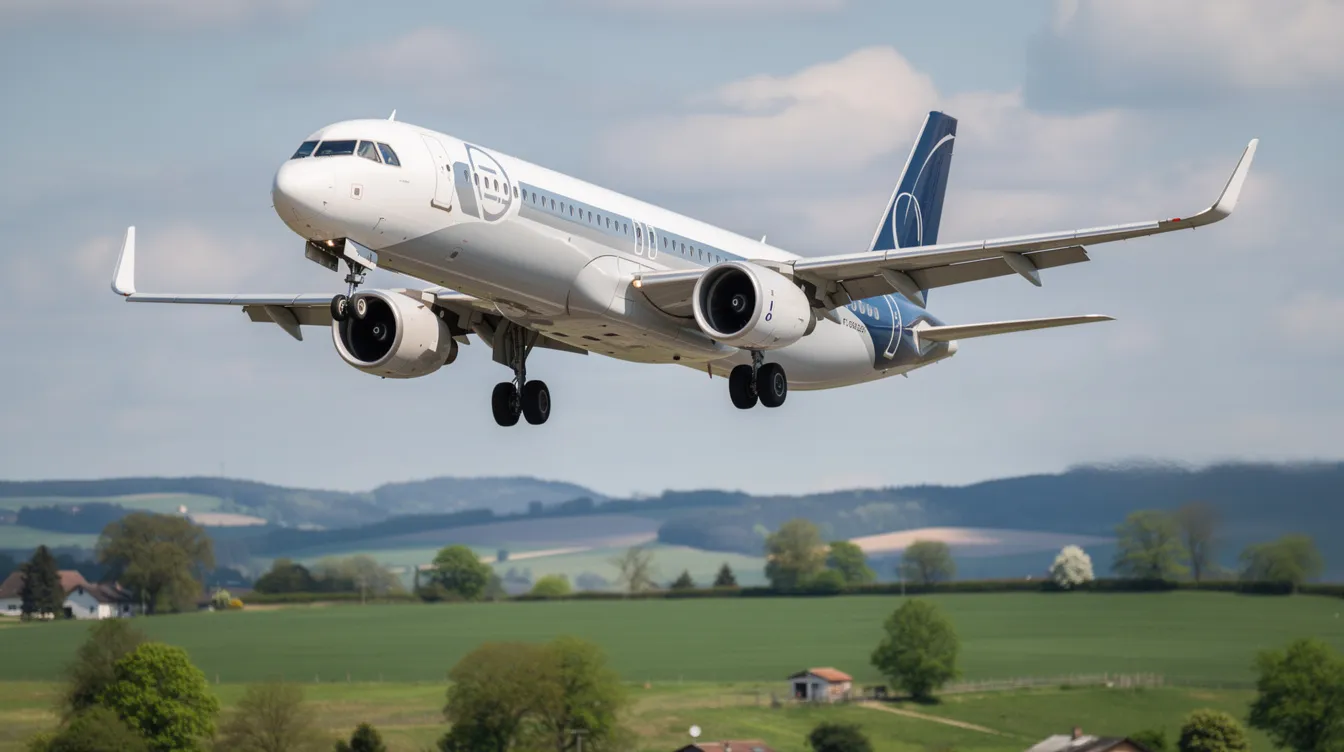
The 737 MAX series was launched on August 30, 2011 as Boeing's response to the re-engined Airbus A320neo, and the first 737 MAX entered service on May 22, 2017 with Malindo Air. As the fourth generation of the Boeing 737 family, the MAX represents the most significant technological leap since the NG.
At its core are the CFM LEAP-1B engines, featuring a broader fan (approximately 69.4 inches in diameter) and higher bypass ratio than the NG's powerplants. The 737 MAX engines are 10–12% more efficient than previous models, and Boeing claims the MAX offers a 20% reduction in CO2 emissions per seat when accounting for all aerodynamic improvements, advanced technology winglets, re-lofted tail cone, and cabin densification options. The 737 MAX series competes directly with the Airbus A320neo family.
The main variants cover the full spectrum of the single aisle market:
-
MAX 7: The smallest variant, optimized for hot-and-high and long-thin routes, seating approximately 138–153 passengers
-
MAX 8: The baseline model with seating around 162–189 in typical layouts and a range near 3,550 nautical miles. The 737 MAX 8 has a range of 3,550 nautical miles
-
MAX 9: A stretched variant for higher passenger capacity, operated by carriers such as Alaska Airlines
-
MAX 10: The longest fuselage in the family, targeting up to roughly 230 seats in high-density single class layouts
The high-density MAX 8-200 variant, tailored for low-cost carriers, offers around 197–200 seats to maximize per-flight revenue. The Boeing 737 family is heavily utilized by low-cost carriers worldwide.
The MAX cockpit builds on the NG with larger 15-inch landscape displays, new flight control computers, and partial fly-by-wire control of spoilers, while preserving training commonality so that NG-qualified pilots require only modest additional preparation.
Safety Challenges, Grounding, and Return to Service of the 737 MAX
Two fatal crashes involving the 737 MAX 8 - Lion Air Flight 610 in October 2018 and Ethiopian Airlines Flight 302 in March 2019 - resulted in 346 fatalities in total and triggered a worldwide grounding of the MAX fleet. The 737 MAX series was grounded worldwide in March 2019, marking the most severe crisis in Boeing's modern history. Boeing paid over $2.5 billion in damages related to the 737 MAX.
Investigations centered on the Maneuvering Characteristics Augmentation System (MCAS), a flight control law designed to improve handling characteristics but found to have critical design, documentation, and training deficiencies. MCAS could push the aircraft's nose down based on input from a single angle-of-attack sensor - a vulnerability that proved catastrophic when that sensor provided faulty data.
During the grounding period from 2019 through 2020, Boeing implemented extensive modifications:
-
MCAS logic was revised so the system cannot repeatedly activate
-
Cross-checks from multiple sensors were added
-
Flight control computer logic was updated
-
Pilot training requirements were expanded, including mandatory simulator sessions
-
Documentation and crew procedures were overhauled
The US FAA approved the MAX for return to service in November 2020, with EASA and other regulatory agencies following through 2021 and 2022. These safety concerns prompted industry-wide reflection on certification processes and manufacturer-regulator relationships.
Since returning to service, ongoing safety improvements, enhanced production quality oversight, and continuous regulatory scrutiny aim to ensure that the 737 MAX meets contemporary safety expectations. As of mid-2026, the FAA has restored Boeing's authority to issue airworthiness certificates for new aircraft at end of production, reflecting growing confidence in current manufacturing standards.
Technical Design: Airframe, Wings, and Flight Controls Across Generations
Despite decades of evolution, all Boeing 737 variants share a recognizable narrow-body airframe with a six abreast seating passenger cabin, conventional tail, and low-slung wing with underwing engines. The fuselage cross section traces directly to the 707 and 727, preserving the approximately 139.2-inch cabin width that has defined the family since the 1960s.
Early models featured distinctive "eyebrow windows" above the main windshield - later removed as cockpit design evolved. The low sill height allowed boarding without air stairs in some configurations, an advantage for operators at smaller airports.
Wing evolution has been central to the 737's improving performance:
-
Original/Classic: Relatively compact wings with limited fuel capacity
-
NG: Substantially larger wings with increased span, more efficient airfoils, and higher fuel volume
-
MAX: Retains NG-type wing structure but strengthened, with split-tip Advanced Technology Winglets to reduce vortex drag
Flight control architecture has remained predominantly hydro-mechanical across all generations, with manual reversion capability for primary surfaces, a deliberate safety philosophy. The NG added advanced spoiler systems and leading-edge devices, while the MAX introduced partial fly-by-wire functionality for spoilers and new flight control computers.
Structural refinements over time include carbon brakes on NG and MAX models, updated aluminum alloys and composite materials, and redesigned landing gear to support higher maximum takeoff weights. These changes collectively improve fuel use, reduce maintenance burden, and extend airframe service life.
Cabin Evolution, Seating Capacity, and Passenger Experience
The 737 passenger cabin has transformed dramatically from the first aircraft that entered service in 1968 to today's MAX variants. Typical seating capacity ranges from 85 to over 230 passengers across the family, with configuration driven by airline business models as much as airframe capability.
The progression of interior design tells the story:
-
Original (1960s–70s): Basic furnishings, higher cabin noise, limited overhead storage
-
Classic (1980s–90s): Improved noise insulation, updated fittings, better air circulation
-
NG (late 1990s–2010s): The Boeing Sky Interior introduced sculpted sidewalls, LED mood lighting, larger overhead bins, and a dramatically quieter cabin
-
MAX (2017–present): Further sound dampening, modernized passenger service units, and enhanced connectivity options
Low-cost carriers typically choose single class, high-density layouts to maximize revenue per flight and increase capacity, while full-service airlines may configure two class cabins with premium economy or business sections at wider seat pitch. The same MAX 8 airframe might seat 162 passengers in a two class arrangement or nearly 200 in a single class configuration.
Cabin evolution has become a competitive differentiator, allowing airlines to customize finishes, seating pitch, and amenities to match their brand identity all while leveraging the common 737 platform for maintenance and fleet efficiency.
Cockpit, Avionics, and Advanced Technology Integration
The 737's cockpit has evolved from mostly analog gauge clusters in the Original and early Classic models to the fully integrated glass cockpits of the NG and MAX a transformation that parallels the broader digitization of commercial flight.
The Classic series marked the first incremental adoption of electronic flight instrument systems (EFIS) and flight management systems (FMS), replacing some traditional gauges with electronic displays and introducing automated navigation capabilities.
The 737 Next Generation cockpit represented a generational leap:
-
Six large LCD primary flight and navigation displays
-
Optional dual Head-Up Displays for enhanced situational awareness during approach
-
Integrated communication and navigation suites
-
Full FMS integration with GPS and satellite-based navigation
The 737 MAX advanced further with 15.1-inch landscape displays, updated flight control computers, and enhanced monitoring systems. These support improved situational awareness, system redundancy, and operational efficiency while maintaining sufficient commonality with NG cockpits to simplify pilot training transitions.
Progressive integration of Performance-Based Navigation (PBN) and Required Navigation Performance (RNP) capabilities enables more precise, fuel-efficient flight paths - particularly valuable on approaches into terrain-constrained airports where traditional procedures require longer, less direct routing.
Engines, Winglets, and Operational Efficiency Improvements
Engines and wingtip devices have been the primary drivers of the 737's steadily improving fuel efficiency and environmental performance across its four generations.
The engine progression tells a clear story of advancing propulsion technology:
|
Generation |
Engine |
Key Improvement |
|---|---|---|
|
Original |
Pratt & Whitney JT8D |
Baseline low-bypass turbofan |
|
Classic |
CFM56-3 |
High-bypass; major fuel consumption reduction |
|
NG |
CFM56-7B |
~7% better fuel burn vs. Classic |
|
MAX |
CFM LEAP-1B |
10–12% more efficient vs. NG |
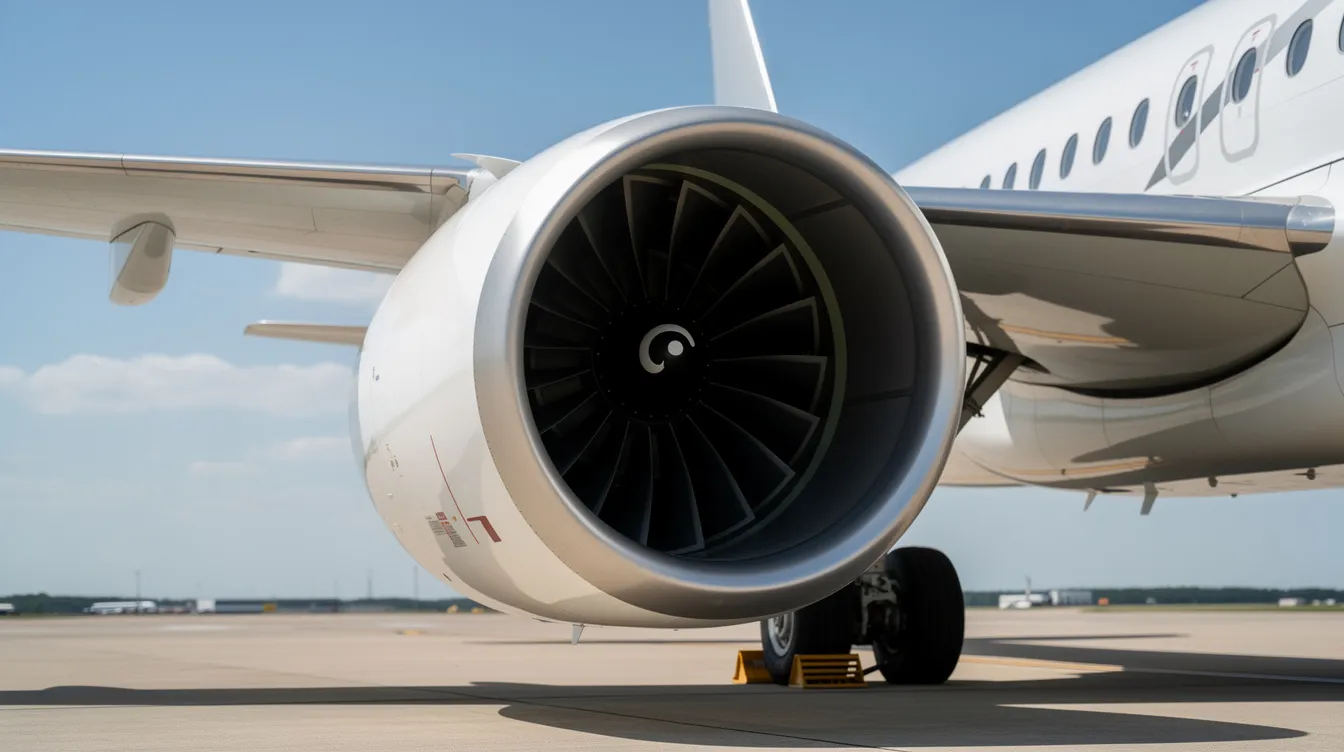
The 737's characteristically low ground clearance forced distinctive engineering solutions for engine nacelle shapes. Classic and NG models feature flattened lower inlets to maintain clearance, while the MAX's redesigned pylons position the larger LEAP-1B engines forward and slightly higher, managing airflow and reducing noise through nacelle chevrons.
Winglet technology has added incremental but meaningful efficiency gains. Winglets on the 737-800 improve fuel efficiency by up to 3.5%, while blended winglets became standard on many NG aircraft. Split-scimitar winglets offered further drag reduction from the mid-2010s, and the MAX's advanced winglets - a dual-feather design - contribute to overall drag reduction and fuel burn improvement.
These technologies translate directly into concrete airline benefits: reduced fuel burn per seat, lower CO2 emissions, smaller noise footprints around airports, and increased payload-range flexibility. Collectively, they help improve fuel efficiency with each successive generation and keep the 737 competitive against newer designs.
Special-Mission and Military 737 Variants
Beyond commercial aviation, the Boeing 737 airframe underpins a diverse portfolio of military aircraft, government, and special-mission platforms, demonstrating the design's remarkable adaptability.
The T-43 "Gator" (CT-43A) served the US Air Force as a navigator trainer from the 1970s until retirement around 2010. Based on the 737-200, it functioned as a "flying classroom" for training navigators in the demands of military aircraft operations, accumulating decades of reliable service.
The E-7 Wedgetail, based on the 737-700IGW, serves as an airborne early warning and control platform. Its distinctive dorsal "top hat" MESA radar provides advanced surveillance capabilities, and the type has been adopted by air force organizations in Australia, Turkey, South Korea, and the United Kingdom, among others.
The P-8 Poseidon is perhaps the most prominent military applications derivative. Derived from the 737-800 with structural reinforcement, strengthened wings, and specialized systems, the P-8 performs long-range maritime patrol and anti-submarine warfare missions. Key specifications include a maximum takeoff weight of approximately 189,200 pounds, a range of about 1,200 nautical miles with four hours on station, and a crew of nine. More than 170 P-8s have been delivered to eight operators as of 2026.
Additional adaptations include the C-40 Clipper logistics transport, various VC-series VIP transports, and specialized maritime surveillance variants - each leveraging the 737's proven airframe, engines, and support infrastructure for missions far removed from routine commercial flight.
Boeing Business Jet (BBJ) and VIP 737 Variants
The Boeing Business Jet concept, launched in the late 1990s, offers corporate, government, and VIP customers a large-cabin, long-range aircraft built on the proven 737 platform. BBJ variants combine the reliability and support infrastructure of the world's most widely operated jetliner with bespoke interiors tailored to the most demanding passengers.
The main BBJ models include:
-
BBJ1: Based on the 737-700 but equipped with strengthened 737-800 wings and landing gear for greater fuel capacity and range
-
BBJ2: Based on the 737-800, offering a larger cabin volume
-
BBJ3: Based on the 737-900ER, the largest NG-based BBJ
-
BBJ MAX variants: Derived from the MAX 7, MAX 8, and MAX 9, incorporating LEAP-1B engine efficiency
Auxiliary fuel tanks installed in the cargo hold dramatically extend range often beyond 5,000 nautical miles enabling nonstop intercontinental missions that standard airline 737s cannot achieve. This longer range capability makes BBJs viable for routes like New York to Moscow or London to Dubai without refueling.
Cabin customization is limited only by imagination and budget. Typical BBJ interiors feature low-density layouts with 20–60 seats, private suites, conference rooms, lounges, and specialized communications systems. Heads of state, multinational corporations, and charter operators all find value in the BBJ's combination of new aircraft technology and familiar maintenance infrastructure.
Cargo, Converted Freighters, and the 737's Role in Air Freight
The 737's size, reliability, and global support network have made it a natural choice for short- and medium-range freighter operations, particularly as older passenger airframes reach the end of their passenger-carrying lives.
From the beginning, Boeing offered factory-built cargo-capable variants. The 737-200QC "quick change" and dedicated freighter models featured convertible passenger-cargo interiors and large side cargo doors, allowing operators to switch between passenger and freight configurations with minimal downtime.
More recently, Boeing's Converted Freighter (BCF) programs have given aging NG-series aircraft a second life. The 737-800BCF, with first deliveries around 2018, converts passenger 737-800s into dedicated freighters through installation of a large main-deck cargo door, reinforced flooring, and removal of passenger interiors. Earlier conversion programs addressed the 737-300 and -400.
Typical freight missions for 737 freighters include:
-
Night-time express parcel services for carriers like FedEx and UPS
-
Feeder routes connecting regional airports to major cargo hubs
-
Regional cargo operations where a narrow-body jet is more efficient than wide-body freighters
The explosive growth of e-commerce and just-in-time logistics has created sustained demand for converted 737 freighters. These programs extend the operational efficiency and economic life of airframes that might otherwise face retirement, giving airlines and cargo operators a cost-effective path into the freight market.
Competition, Market Position, and Global Operators
The Boeing 737's primary competition in the single aisle market comes from the Airbus A320 family - a rivalry that has defined commercial aviation for over three decades. More recently, the Airbus A220 (formerly Bombardier CSeries) and China's Comac C919 have emerged as challengers at the lower end of the capacity spectrum.
Market share data tells a compelling competitive story. Boeing delivered 8,918 737s between 1988 and 2018, while Airbus delivered 8,605 A320 family aircraft by 2018. Airbus had a 59.4% market share in 2017, and the Boeing 737 was surpassed by the A320 family in orders in 2019, partly reflecting the impact of the MAX grounding. Despite this, the 737 remains among the best-selling commercial aircraft families in history, with more than 10,700 total deliveries across all generations.
Boeing announced deliveries and orders that demonstrate the 737's enduring global appeal. Among the largest operators as of the mid-2020s are Southwest Airlines (the world's largest 737 operator), Ryanair (Europe's largest low-cost carrier and an all-737 fleet), United Airlines, American Airlines, and numerous carriers across Asia-Pacific and Latin America. The 737 family has a strong maintenance and training infrastructure available worldwide, which heavily influences airline purchasing decisions.
Airlines choose between the 737 and competing platforms based on existing fleet commonality, pilot training requirements, maintenance infrastructure, financing terms, and delivery schedules - factors that often outweigh marginal performance differences between platforms.
Accidents, Safety Record, and Continuous Improvement
Given the enormous number of 737 flights since 1968, the type has experienced a range of incidents. The Boeing 737 family has 529 aviation accidents as of November 2023. This figure must be understood in context: the 737 has accumulated more flight hours and departures than virtually any other aircraft type, and accident rates have declined substantially with each generation.
Safety improvements are measurable across the family's history. Original-series aircraft exhibited higher accident rates per flight hour, reflecting the era's less mature safety systems and procedures. Classic and NG generations progressively reduced hull loss rates through better engine reliability, improved avionics, enhanced training standards, and stricter regulatory oversight. The hull loss rate for the MAX series is 1.48 per million departures.
Several systemic issues have been identified and addressed over the decades. Rudder control problems in certain -200 and -300 series aircraft contributed to accidents in the 1990s, prompting regulatory and engineering fixes to the rudder power control unit that improved safety for the entire fleet. This was kept quiet as the rudder power control system was being corrected but many pilots that flew the 737-200 had to train specifically for the "rudder hardover" event. This was particularly disturbing when it was discovered in the event of a hardover, the pilot had to lower the nose to accelerate a "cross over speed" in which the ailerons would be effective at overcoming the forces of the failed rudder.
The two fatal crashes of MAX aircraft, discussed in detail earlier, triggered the most intense period of safety scrutiny in modern commercial aviation. The industry's broader response - encompassing more rigorous certification processes, greater transparency between manufacturers and regulators, and enhanced collaboration with airlines - has reshaped how new aircraft systems are evaluated and documented.
Today, data-driven safety programs, flight data monitoring, and continual design reviews contribute to keeping modern 737 operations aligned with contemporary safety expectations. The Boeing 737 remains a cornerstone of airline fleets worldwide, and its safety culture continues to evolve.
Conclusion: The Enduring Legacy and Future of the Boeing 737
Since its first flight in 1967, the Boeing 737 has evolved through four generations, dozens of variants, and countless incremental upgrades to remain one of the most important aircraft families in aviation history. What began as a modest short-haul feeder jet has become the platform around which much of the world's airline operations are built.
Each generation from the JT8D-powered Original through the Classic, the 737 Next Generation, and the 737 MAX - responded to changing market needs, regulatory requirements, and technological opportunities. Advances in fuel efficiency, noise reduction, passenger comfort, and operational efficiency have kept the 737 relevant across nearly six decades of service.
The breadth of the 737's roles is remarkable: mainstream commercial airliner, Boeing Business Jet for corporate and VIP transport, cargo and converted freighter, and specialized military and government platform. Few aircraft designs have demonstrated such versatility.
Looking ahead, continued MAX deliveries, freighter conversions, and special-mission programs suggest that the 737 will remain active in global airline fleets for decades. Even as newer designs and sustainability initiatives - including sustainable aviation fuel compatibility - shape the next era of commercial aviation, the 737's installed base and ongoing production ensure its continued relevance.
The Boeing 737's combination of versatility, operational efficiency, and continuous evolution cements its place as a cornerstone of both commercial and corporate aviation - a new aircraft concept from the 1960s that has proven timeless.

Frequently Asked Questions about the Boeing 737
This FAQ addresses practical questions not fully covered in the main article, focusing on everyday concerns about seating, range, airport compatibility, aircraft comparisons, and longevity. Answers are general and may vary by specific 737 model, airline configuration, or operator requirements, but concrete ranges and figures are provided where possible.
What is the typical seating capacity of different Boeing 737 generations?
Original 737-100 and 737-200 aircraft usually seated around 85 to 120 passengers depending on layout, with the -200 Advanced version occasionally reaching 130 in high-density configurations. Classic -300, -400, and -500 models ranged from roughly 100 to 168 seats, with the -400 offering the highest capacity in the family.
The 737 Next Generation aircraft span from about 108 seats on the -600 up to around 189 on the -800 in single class high-density layouts, while the -900ER can accommodate over 200 passengers in its densest configuration.
The 737 MAX variants cover a similar spectrum: MAX 7 typically seats around 138–153 passengers, MAX 8 around 162–189, MAX 9 around 178–193, and MAX 10 is designed to reach roughly 204–230 seats in single class layouts. Airlines choose configurations based on their business model - low-cost carriers favoring density, full-service airlines preferring two class layouts with greater comfort.
How far can a Boeing 737 fly, and which models have the longest range?
Early 737-100 and 737-200 aircraft were optimized for ranges in the 1,500 to 2,000 nautical miles bracket, well suited to short- and medium-range domestic and regional routes.
Classic and 737 Next Generation versions expanded the envelope considerably. Many -300, -400, and -500 aircraft flew roughly 2,000 to 2,500 nautical miles, while NG models like the -800 and -900ER achieved approximately 2,900 to 3,600 nautical miles depending on configuration and payload. The 737-800 can fly 260 nautical miles farther than earlier models in similar weight classes.
The 737 MAX family further extends range, with the MAX 8 often advertised at approximately 3,550 nautical miles and the MAX 9 reaching similar distances - enabling transcontinental and some thinner transoceanic routes previously out of reach for single-aisle jets.
Boeing Business Jet variants, equipped with auxiliary fuel tanks, can exceed 5,000 nautical miles, enabling nonstop flights between many intercontinental city pairs not typically served by standard airline 737s.
Can a Boeing 737 operate from smaller regional airports?
The 737 was originally designed with relatively short landing gear and good low-speed performance to serve airports with modest infrastructure, including those without jet bridges. This heritage makes it more versatile than many competitors at medium-sized secondary airports worldwide.
However, it still requires runways of sufficient length, pavement strength, and obstacle clearance. These requirements vary by specific 737 model, takeoff weight, and environmental conditions - particularly temperature and elevation. Airlines and regulators use detailed performance charts to determine allowable payloads and operational feasibility at specific airfields, especially at hot-and-high locations or short runways.
For very small or remote airstrips, turboprops and smaller regional jets remain more suitable. But the 737's ability to operate from Thompson site airports and many secondary fields has been central to its global success.
How does the Boeing 737 compare with other aircraft in the single-aisle market?
The 737's primary competitor is the Airbus A320 family, with both lineups offering similar seating, range, and efficiency options for short- and medium haul routes. Performance differences between equivalent models are generally modest, and airlines often base their choices on existing fleet commonality, pilot training infrastructure, financing terms, and delivery schedules.
Newer entrants like the Airbus A220 and Comac C919 target parts of the same market, particularly at the lower end of the capacity spectrum, adding more choice for airline customers evaluating fleet decisions.
Decades of operational data, a broad global support network, and continuous technological upgrades help the 737 remain a benchmark when carriers evaluate other aircraft for similar missions. The 737's dominance of the single aisle market, alongside the A320, appears unlikely to be seriously challenged in the near term.
What keeps older Boeing 737s in service, and how long can they operate?
Airliner lifespans are typically measured in flight cycles (pressurization events) and flight hours rather than calendar age. Many 737s are designed for tens of thousands of pressurization cycles over several decades of service, and structural fatigue limits are well understood through decades of fleet experience.
Airlines perform scheduled heavy maintenance checks - including C-checks and D-checks - along with structural inspections and component overhauls to keep aging 737s airworthy and compliant with evolving safety regulations. These programs are standardized and well supported by Boeing's global maintenance network.
As airframes age and fuel prices or noise rules tighten, many older passenger 737s transition into cargo roles or special-mission platforms. Freighter conversions extend economic life in less demanding operating environments where medium range capability and reliability matter more than passenger comfort.
Ultimate retirement decisions depend on maintenance costs, fuel consumption relative to newer models, regulatory constraints, and availability of replacement aircraft - not solely on calendar age. This flexibility is one reason why the Boeing 737 family continues to serve operators worldwide long after individual airframes enter their third or fourth decade of operation.


