

Piper Cub: History, Design, and Lasting Legacy of an Aviation Icon
The Piper Cub is often called the Ford Model T of aviation-a comparison that captures how one simple airplane put flying within reach of ordinary people and changed the course of American aviation history. From Depression-era Pennsylvania to the battlefields of World War II and beyond, the Cub earned its place as a cultural icon. Here is the full story.

Aircraft Snapshot
The Piper J 3 cub is a 1930s–1940s American light aircraft that trained the vast majority of U.S. pilots before and during world war ii and remains one of the most recognizable airplanes ever built.
-
Depression-era origins: The Cub traces back to the Taylor E-2 Cub of 1930, evolving under engineer walter jamouneau into the Piper J-3 Cub-the primary trainer and sport plane of the civilian pilot training program that prepared thousands of pilots for war.
-
Forgiving flight characteristics: A low stall speed of around 38 mph, gentle handling, and a lightweight design made the Cub ideal for training, bush flying, and liaison work.
-
Military workhorse: Military variants like the L-4 "Grasshopper" served in artillery spotting, reconnaissance, medical evacuation, and coastal patrol during wwii.
-
Enduring legacy: The Cub's DNA lives on through surviving J-3s, the PA-18 super cub, and modernized versions of the Cub still produced today, plus RC and 3D-printed models for hobbyists worldwide.
Origins of the Piper Cub: From Taylor E-2 to J-2
In the early 1930s, at the depth of the Great Depression, a small company called Taylor Aircraft operated out of Bradford, pennsylvania. Its founder, Gilbert Taylor, had a straightforward ambition: build an airplane cheap enough for almost anyone to fly. The Taylor E-2 Cub first appeared in 1930, a bare-bones tandem two-seater powered by a two cylinder brownbach tiger kitten engine producing roughly 20 hp. Its construction-fabric stretched over a welded steel-tube fuselage, wooden wing spars and ribs-kept the price as low as possible.
The E-2 caught the attention of William Piper, a local oilman and investor. When Taylor Aircraft slid toward bankruptcy in 1931–1932, Piper stepped in with capital and eventually acquired the company outright. His business sense and willingness to invest in improvements set the stage for the Cub's transformation.
Engineer walter jamouneau joined the effort and redesigned the E-2 into the Taylor J-2 Cub by 1935–1936. His changes included rounded wingtips, a cleaner engine cowling, a more refined cockpit layout, and improved aerodynamics throughout. The "J" in the designation honored Jamouneau's design series, while the name "Cub"-a holdover from the original kitten engine branding-stuck permanently.
Shortly after, piper moved production from Bradford to Lock Haven, Pennsylvania, a facility that would become synonymous with piper aircraft and cub production for decades.
Design and Development of the Piper J-3 Cub
Introduced in 1937, the Piper J 3 Cub represented the mature form of the early Cub line-a careful balance of cost, performance, and simplicity that made it the definitive trainer and sport plane of its era. The j 3 cub is renowned for its simplicity and affordability, qualities that opened aviation to thousands of budding pilots.
Structurally, the J-3 retained the welded steel-tube fuselage and fabric skin of its predecessors. Its high-wing monoplane layout, braced by lift struts, sat atop a fixed taildragger undercarriage. Tandem seating in the Cub allows for effective instructor-student interaction during flight, with the student up front and instructor in the rear.
The powerplant evolved over the production run. Early models used Continental A-40 engines producing about 40 hp, but the standard became the air cooled, horizontally opposed Continental A-65 generating 65 hp. With this engine, cruise speed settled around 65 knots (about 75 mph) and the aircraft exhibited a low stall speed near 33 knots-roughly 38 mph.
Key refinements separated the J-3 from the earlier J-2: a fully enclosed cowling, an integrated fin and rudder, a steerable tailwheel replacing the earlier tail skid, improved control linkages, and better cockpit ergonomics. Piper also standardized the signature lock haven yellow paint scheme-later known as cub yellow-with a black lightning-bolt stripe along the fuselage. That haven yellow livery became an instantly recognizable aviation icon.
Multiple engine options (Continental, Franklin, Lycoming) and sub-variants like the J3C-65 allowed piper aircraft to tailor the airframe to different customers and regulatory categories.
Piper J-3 Cub Specifications and Performance
This section provides concrete numbers for a typical J3C-65 Cub-a technical snapshot of an airplane designed to be affordable and accessible for budding aviators.
|
Specification |
Value |
|---|---|
|
Seats |
2 (tandem) |
|
Wingspan |
35 ft 3 in (10.74 m) |
|
Length |
22 ft 5 in (6.83 m) |
|
Height |
6 ft 8 in (2.03 m) |
|
Empty weight |
~680 lb (308 kg) |
|
Max gross weight |
1,220 lbs |
|
Engine |
Continental A-65-8, 65 hp |
|
Cruise speed |
65 knots (75 mph) |
|
Top speed |
~76 knots (87 mph) |
|
Stall speed |
~33 knots (38 mph) |
|
Service ceiling |
11,500 feet |
|
Fuel capacity |
9 gallons (standard fuel tank) |
|
Fuel burn |
3–4 gallons per hour |
|
Range |
~146–200 statute miles |
The Piper J 3 Cub is powered by a 65 hp engine that sips fuel-the J-3 Cub typically burns only 3–4 gallons of fuel per hour, making it one of the most economical airplanes to operate. Some later models and aftermarket modifications added wing tanks for extended range, though the standard configuration carried just 9 gallons.
The combination of low stall speed, short takeoff and landing distances, and very low wing loading gave the Cub its famously predictable, forgiving handling. These traits made it effective for grass strips, small fields, and the bush operations that would later define its reputation in Alaska and canada. The high-wing design of the J-3 Cub provides excellent downward visibility, a feature prized by both student pilots and military observers.

The Civilian Pilot Training Program and Pre-War Expansion
In 1939, the U.S. government launched the civilian pilot training program under the Civil Aeronautics Authority-a sweeping national effort to rapidly increase the pool of trained pilots as war loomed in Europe. Hundreds of flight schools needed affordable, forgiving training aircraft, and the J-3 became the primary trainer for the CPTP.
By the early 1940s, 75% of CPTP pilots trained on Piper J-3 Cubs. This pipeline supplied future military aviators for the army Air Forces, the navy, and allied air arms. The Cub's gentle handling made it ideal: the J 3 cub is well-regarded for training beginner pilots due to its gentle handling and honest aerodynamic feedback.
Production at Piper aircraft's lock haven plant surged to meet demand. In 1940, Piper built 3,016 J-3 Cubs-a dramatic leap from the few hundred produced annually just two years earlier. At peak wartime production, Piper produced one Cub every 20 minutes.
The CPTP also had a broader social impact. Young civilians, including many college students and underrepresented groups, gained access to flight training that would otherwise have been unaffordable. The standardized syllabi, maintenance procedures, and parts supply under the program helped solidify the plane's reputation as America's basic trainer.
World War II Service: L-4 Grasshopper and Military Roles
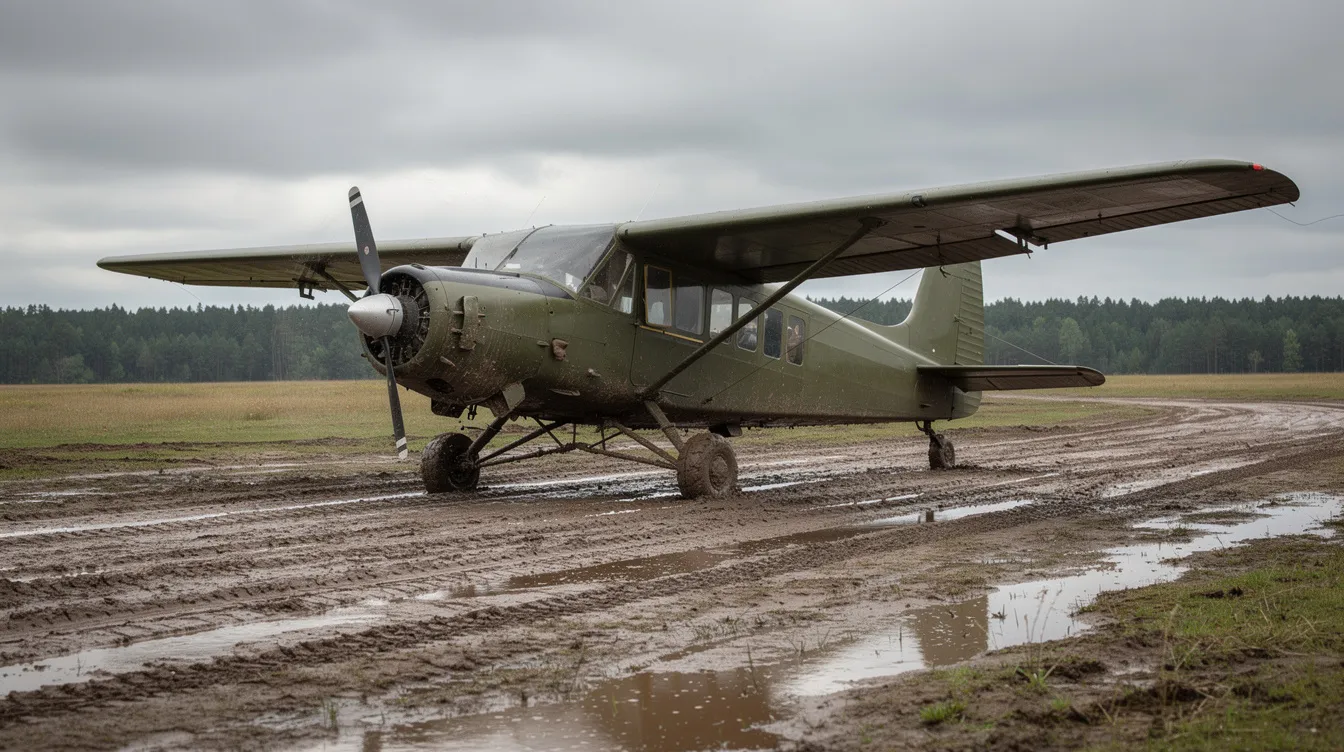
When the United States entered the war, the army and Allied forces adapted the J-3 into a military airplane under designations including O-59 and later L-4 Grasshopper. The transformation was straightforward: the civilian airframe received cub olive drab paint, enlarged greenhouse-style windows for maximum visibility, military radios, and fittings for stretchers or cargo in place of the passenger seat.
The L-4 Grasshopper was used for reconnaissance and supply missions, along with artillery spotting, command liaison flights, courier runs, and light medical evacuation from improvised fields or roads near the front lines. Some Cubs performed forward air control duties, directing artillery fire onto enemy positions from just a few hundred feet above the battlefield. Piper Cubs were also used by the civil air patrol for coastal patrol missions along the American shoreline, watching for enemy submarines.
Production numbers tell the scale: 5,677 military variants of the J-3 were produced during WWII, with total Cub-family wartime output reaching well into the many thousands. Notably, the Piper J-3 Cub was the first American plane shot down in WWII-a grim distinction that underscores how close these unarmed aircraft operated to danger.
Improvised ground-attack episodes also occurred. One famous example was "Rosie the Rocketer," an L-4 fitted with bazooka launchers under each wing to strike armored vehicles-a remarkable feat for such a light aircraft weighing barely over 1,000 pounds.
Post-War Civilian Boom and the Cub's Lasting Popularity
After 1945, returning veterans, abundant war-surplus materials, and an optimistic belief in a mass "air-minded" society created a boom in general aviation. Thousands of surplus L-4s were sold at bargain prices, often re-registered as civilian registered J-3 Cubs, providing affordable entry-level aircraft for private owners and flying clubs across North America.
Between 1938 and 1947, Piper sold 19,073 J-3 Cubs-making it one of the most numerous light aircraft ever built. Many were exported or license-built in countries like canada, Denmark, and Argentina. The last J-3 model was assembled in 1952, closing out a remarkable production run.
The Cub became a fixture at grass airstrips, flight schools, and small-town airports, used for primary training, pleasure flying, banner towing, and glider towing. Culturally, it became the airplane most Americans picture when they think of a small plane-appearing in airshows, films, and nostalgic art celebrating the golden age of aviation.
The Piper Cub is considered an icon of American general aviation. Even decades later, over 5,000 J-3 Cubs remain on the FAA registry today, many lovingly restored and flown by vintage-aircraft enthusiasts at fly-ins across the country.
Beyond the J-3: PA-11 Cub Special and PA-18 Super Cub
After J-3 production wound down, the company evolved the Cub concept to match changing post-war demands. The Piper J-3 Cub evolved into models like the PA-11 Cub Special and PA-18 Super Cub, each building on the original's strengths while adding capability.
The PA-11 Cub Special featured a cleaner cowling, the pilot seated in the rear for solo flight, higher-powered engines in the 90 hp range, and an improved windshield-making it more comfortable and capable than a basic J-3 as a personal airplane.
The PA-18 super cub, introduced in the late 1940s, represented a larger leap. Progressively more powerful engines-from about 95 hp up to 150+ hp-combined with flaps, stronger landing gear, and structural reinforcements gave it outstanding short takeoff and landing performance. Bush pilots in Alaska and other remote regions prized the Super Cub for operations from river bars, tundra, and mountain strips where no other plane could safely go.
PA-18 production continued into the early 1990s, and many Super Cubs remain workhorses in bush flying, aerial survey, and recreational off-airport flight worldwide. These successors preserved the basic Cub DNA-taildragger layout, tandem seating, high wing, and docile low-speed behavior-while significantly expanding the climb rate, payload, and mission envelope.
The Piper Cub in Modern Aviation and Enthusiast Culture
Though designed in the 1930s, the Piper Cub remains active in 21st-century aviation as a flying antique, a training tool, and an inspiration for new designs. Modernized versions of the Cub are still produced today by companies like CubCrafters and American Legend, sometimes using composite materials, stronger engines, and updated avionics while keeping the classic high-wing, tandem-taildragger form.
The restoration and preservation scene thrives. Owner associations host fly-ins at lock haven and other historic gathering points, where enthusiasts meticulously rebuild airframes using period-correct fabrics, engines, and paint schemes. Specimens displayed at national air museums and local aviation collections serve as representative examples of grassroots flying and world war ii liaison operations.
RC and 3D-printed Piper J-3 Cub models have also grown popular-park flyers, foam kits, and larger gas-powered scale models allow hobbyists to experience Cub-like flying characteristics without leaving the ground. The gentle, predictable behavior translates surprisingly well to model scale.
In pilot training philosophy, the Cub continues to matter. Instructors use it to teach basic stick-and-rudder skills, tailwheel proficiency, and energy management. The Piper Cub has a lightweight design that emphasizes fundamental flying skills, and its honest handling builds habits that serve pilots well in every airplane they fly afterward.
How the Piper Cub Flies: Handling and Pilot Experience
Beyond numbers and history, the Cub is renowned for the way it feels in the air-shaping generations of pilots' habits from their very first flying time.
The cockpit is narrow, basic, and intimate. When flying solo, the pilot sits in the rear seat for proper weight and balance, looking out over minimal analog instruments. Visibility sideways and downward is excellent thanks to the high wing and large windows. There is no electrical system in many original models, no flaps, and a fixed-pitch propeller-constraints that force the pilot to manage energy, speed, and attitude manually.
On the ground, tailwheel configuration of the Cub requires precise rudder control for effective landing and takeoff. Adverse yaw is plainly felt in turns, teaching coordination between rudder and aileron without masking poor technique. The Cub's design demands proper rudder usage, which helps develop superior flying skills-a trait instructors have valued for nearly nine decades.
Typical training exercises include slow flight just above stall, stall recognition and recovery, slips to lose altitude without flaps, and crosswind landings. Because the aircraft is low mass and low powered, momentum management is vital. Flying a Piper Cub is often described as "pure" or "back to basics," connecting pilots to the roots of powered flight without automation or complex systems.

Collecting, Ownership, and Maintenance Considerations
Owning a Piper Cub today blends vintage-aircraft stewardship with practical flying, requiring attention to certification, maintenance, and parts sourcing.
Prospective owners should start by researching the serial number and logbooks of any candidate airplane. An A&P mechanic experienced with tube-and-fabric aircraft should assess fabric condition, engine time, and structural integrity. The steel-tube fuselage must be checked for internal corrosion and cracked welds; wooden wing spars and ribs are vulnerable to moisture damage. The process verifies that the airframe meets current airworthiness standards.
When researching aircraft history through online FAA databases and registry tools, users sometimes encounter websites performing security verification to confirm the visitor is legitimate and not among the malicious bots that scrape aviation data. Once a security service confirms the request-verification successful-access to historical records, including any respond ray id reference in the system, is granted. This security step protects the integrity of registration data.
Operating costs are modest by aviation standards: fuel burn is low, and the simple engine keeps maintenance straightforward. However, hangarage, insurance, periodic fabric replacement, and Airworthiness Directive compliance for legacy components can add up. Engine upgrade paths and avionics retrofits-modern radios, GPS-are available, though collectors who value originality often prefer period-correct restorations.
Community resources are strong. Owner clubs like the Piper Owner Society, type certificate holders, and experienced restorers provide knowledge-sharing, technical support, and access to reproduction parts for J-3 and related models.
Frequently Asked Questions
Below are answers to common questions about the Piper J-3 Cub and its derivatives that supplement the main sections above.
How many Piper J-3 Cubs are still flying today?
Aviation registries show several thousand J-3s and military L-4 Grasshoppers still on the books worldwide. Over 5,000 are recorded on the U.S. FAA registry in recent decades. Not all registered aircraft are actively airworthy-some sit in barns awaiting restoration-but a substantial fraction are maintained and flown regularly at grass strips, fly-ins, and vintage air events across North America and Europe.
Can a Piper Cub be used for modern pilot training?
Many instructors continue to use J-3s and Super Cubs for tailwheel endorsements, basic stick-and-rudder instruction, and introductory flights. While Cubs are less common as primary trainers than in the 1940s, they remain valuable for teaching visual flying, energy management, and coordination. Students typically transition afterward to more complex, tricycle-gear trainers equipped with advanced avionics for instrument and cross-country work.
What licenses or ratings are needed to fly a Piper J-3 Cub?
In most jurisdictions, a standard private pilot license with single-engine land privileges is sufficient, provided the pilot has received tailwheel training and any required logbook endorsements. Some Cubs may qualify for operation within certain light-sport or recreational categories depending on national regulations, which can allow flying with simplified licensing under specific weight and speed limits.
How does the Piper Cub compare to modern light-sport aircraft?
Modern light-sport aircraft generally offer higher cruise speeds, better climb rates, and advanced avionics packages. However, they often lack the Cub's ultra-low-speed handling, short-field capability, and nostalgic appeal. The Cub's tube-and-fabric construction and tailwheel configuration demand more hands-on piloting, making it an excellent platform for skill-building rather than pure efficiency or passenger comfort.
Are there 3D-printed or RC models based on the Piper J-3 Cub?
The J-3 Cub is one of the most popular subjects for radio-controlled and 3D-printed aircraft. Designs range from small foam park flyers to large, gas-powered scale models that replicate the Cub's gentle flight characteristics. Modern LW-PLA and foam construction methods allow builders to produce accurate replicas using prepared print files, recommended electronics lists, and detailed build guides available through online communities.


