

Boeing 757: History, Performance, and Lasting Legacy
The Boeing 757 occupies a rare place in aviation history. Designed as a fuel-efficient replacement for the aging 727, this narrow body jet exceeded expectations in nearly every measurable way and earned a devoted following among the pilots who flew it. From its first commercial flight in 1983 through its continued service in the mid-2020s, the 757 has proven itself on everything from short domestic hops to demanding transatlantic routes. This article covers the full story, from development and technical design to pilot experience, airline operations, safety data, and lasting legacy.
Aircraft Snapshot
The Boeing 757, especially the boeing 757 200, is a high-performance narrow body jet that entered service in January 1983 and became a favorite among pilots and airlines like Delta Air Lines and Shanghai Airlines. Boeing produced 1,050 of these aircraft between 1981 and 2004, delivering them to 55 customers worldwide.
-
The 757's powerful engines, excellent climb performance, and robust design allowed it to fly intercontinental routes, including many early U.S.–Europe transatlantic services that other narrowbodies couldn't support.
-
From a pilot's perspective, the 757 was considered "overpowered," responsive, and reliable. Many crew members describe it as one of the most enjoyable and confidence-inspiring commercial jets ever built, especially in challenging weather and short runways operations.
-
Although production ended in 2004 and the last delivery occurred on november 28, 2005, the 757 remains vital in passenger, cargo, and VIP roles worldwide, with major operators such as delta, FedEx, and ups airlines.
-
The following sections cover development history, variants, technical specifications, operations, safety record, and common passenger questions in detail.
Overview of the Boeing 757 Program
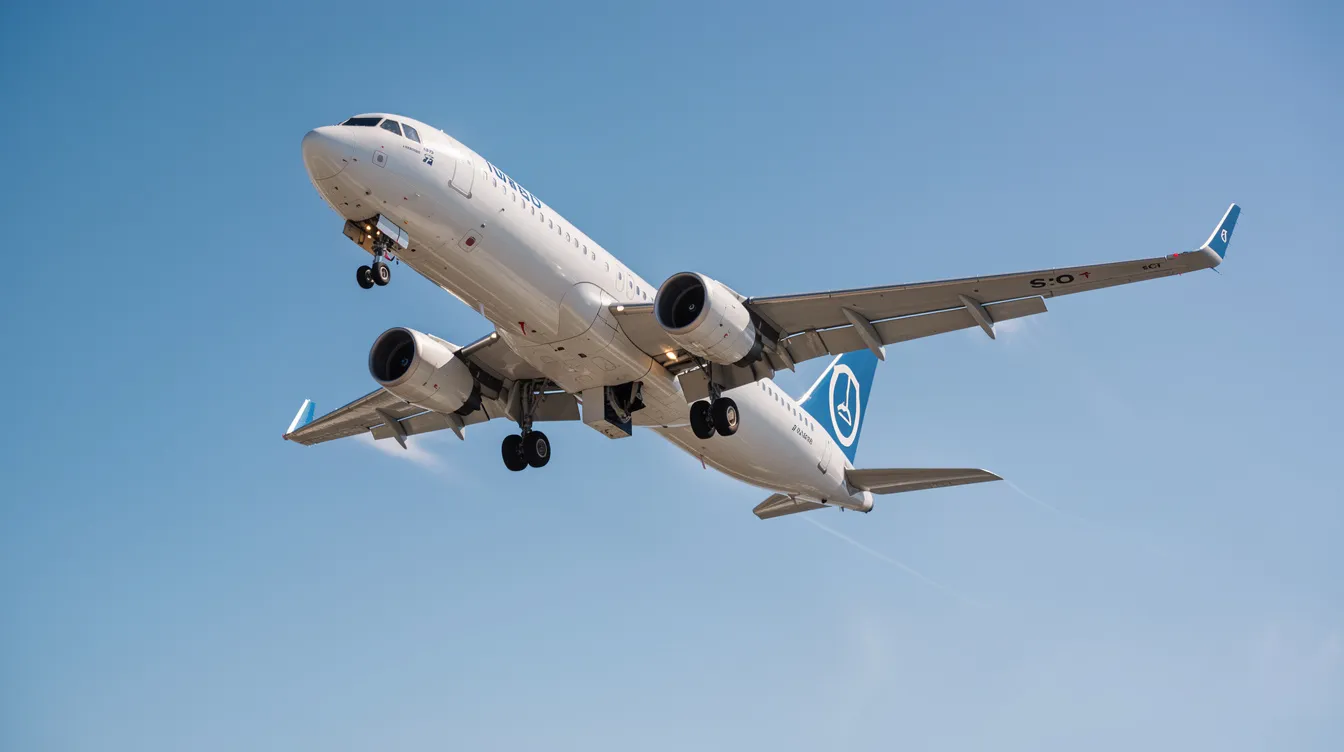
The Boeing 757 is a mid-size narrow body twin-engine jet airliner that Boeing built between 1981 and 2004 at its final assembly line in Renton, Washington. The aircraft was designed as a replacement for the Boeing 727 on short and medium-haul routes, offering significantly better fuel efficiency and greater range than its predecessor.
Key program milestones came quickly. Boeing launched the program in the late 1970s, and the prototype rolled out on january 13, 1982. The first flight followed on February 19, 1982, the FAA granted certification on December 21, 1982, and the first commercial service took place on January 1, 1983 with eastern air lines on the Atlanta–Tampa route.
Within Boeing's product line, the 757 sat between the smaller 737 and the wide-body 767. A critical strategic decision was developing both the 757 and 767 simultaneously, giving them shared flight deck designs and systems. This cockpit commonality allowed airlines to grant pilots a common type rating for both aircraft, reducing training costs substantially.
The 757 served multiple roles: high-density short-haul shuttle operations, U.S. coast-to-coast transcontinental flying, and transatlantic routes or other intercontinental routes that demanded strong performance from airports with shorter runways and hot and high conditions. Its enduring reputation as a "pilot's airplane" rests on strong climb performance, precise handling, and robust, reliable systems.
Design Goals and Development History
By the mid-1970s, airlines faced a convergence of pressures. The oil crises of 1973 and 1979 sent fuel costs soaring, while emerging noise regulations demanded quieter aircraft. Airlines needed a 727 successor that could burn dramatically less fuel per seat while meeting stricter environmental standards.
Boeing initially explored stretching the 727 into a trijet 727-300, but ultimately shifted toward a clean-sheet twinjet concept code-named "7N7." This design leveraged more advanced aerodynamics, including a supercritical wing that could reduce drag and improve cruise efficiency well beyond what a 727 derivative could achieve.
The decision to develop the 757 in parallel with the wide-body 767 proved strategically brilliant. Both aircraft share similar flight decks, flight management systems, and CRT-based electronic displays. This commonality meant that an airline operating both types could train pilots on one and qualify them on the other with minimal additional instruction, saving significant time and money.
Major development milestones included a design freeze, extensive wind-tunnel testing of the wing and high-lift devices, and an industrial plan to assemble the jet at Boeing's Renton facility. Early customer discussions with British Airways and Eastern Air Lines shaped the program's capacity targets, range requirements, and the eventual offering of two engine families: the rolls royce RB211 series and the pratt whitney PW2000 family. These conversations ensured the 757 would meet real-world operational demands from day one.
Production, Testing, and Entry into Service
Boeing produced the 757 at its Renton, Washington plant, building roughly half the airframe's major components in-house while sourcing structures like wing sections and empennage assemblies from specialized subcontractors.
The prototype made its first flight on February 19, 1982, powered by Rolls Royce RB211-535C engines. Boeing ran an intensive flight-test campaign that frequently operated seven days per week to compress the certification timeline. Key test objectives included:
-
Fuel-burn verification under various loading and altitude conditions
-
Performance validation in both hot-and-cold weather extremes
-
Route-proving across real airline networks
-
Structural and systems reliability checks
A welcome surprise emerged during testing: the aircraft came in lighter than design targets, and fuel burn proved approximately 3% better than originally projected, giving the 757 increased range and improved economics.
The FAA issued type certification on December 21, 1982, with the UK CAA following on January 14, 1983. ETOPS considerations developed later in the decade would further expand the aircraft's reach.
Eastern Air Lines, the launch customer, began revenue service on January 1, 1983. Delta Air Lines received the first carrier aircraft equipped with Pratt & Whitney PW2037 engines on November 5, 1984. British airways soon deployed the type on its UK shuttle routes, establishing the 757 across both sides of the Atlantic early in its career.
Major Variants: 757-200, 757-300, and Proposed -100
The Boeing 757 family centered on the boeing 757 200 passenger model, which accounted for 913 of the 1,050 aircraft produced, making it by far the most popular variant.
757-200 Passenger: The baseline model typically seated 178–200 passengers in a two-class configuration. In high-density single-class layouts, the 757-200 can carry up to 239 passengers. With a maximum range of 3,900 nautical miles, it offered flexibility for both domestic and transatlantic missions.
757-200PF (Package Freighter): This dedicated freighter variant features a large main-deck cargo door and can carry a maximum payload of 87,700 pounds. Major express carriers like ups, FedEx, and DHL operate this version.
757-200SF (Special Freighter): The 757-200SF is a passenger-to-freighter conversion model that gives aging passenger airframes a second life in cargo operations. The conversion process includes removing windows, adding a reinforced cargo door, and strengthening the lower fuselage structure.
757-200M: This lesser-known convertible variant allows operators to switch between passenger and cargo configurations, offering operational flexibility for airlines with variable demand.
757-300: The stretched variant extended the fuselage by approximately 23 feet (7.1 m) over the 757-200, increasing capacity to a maximum of 295 passengers in single-class high-density layouts. The 757-300 has a maximum range of 3,395 nautical miles, and it holds the distinction of being the longest single-aisle twinjet ever produced. Operators included Condor, Icelandair, and Delta Air Lines.
Proposed 757-100: Boeing studied a shorter variant seating roughly 150 passengers as a more direct 727-200 replacement. However, weight and economic concerns led Boeing to cancel the concept in 1979 before it reached production.
Technical Design and Performance
The 757 combined a supercritical wing, powerful high-bypass turbofan engines, and advanced avionics to deliver outstanding performance and fuel efficiency for its era.
Wing and Aerodynamics: The aircraft features a 2,000 sq ft supercritical wing designed to reduce drag at transonic cruise speeds. Leading-edge slats and sophisticated trailing-edge high-lift devices allow short-field operations while maintaining efficient cruise at Mach 0.80. These aerodynamic features gave the 757 an advantage over competitors at airports with physical or regulatory runway constraints.
Engines: The 757 is powered by Rolls-Royce RB211 or Pratt & Whitney PW2000 engines, with thrust ratings ranging from 37,000 to 43,000 lbf depending on variant. This generous thrust, paired with moderate aircraft weight, produces a high thrust-to-weight ratio that defines the 757's character in the air.
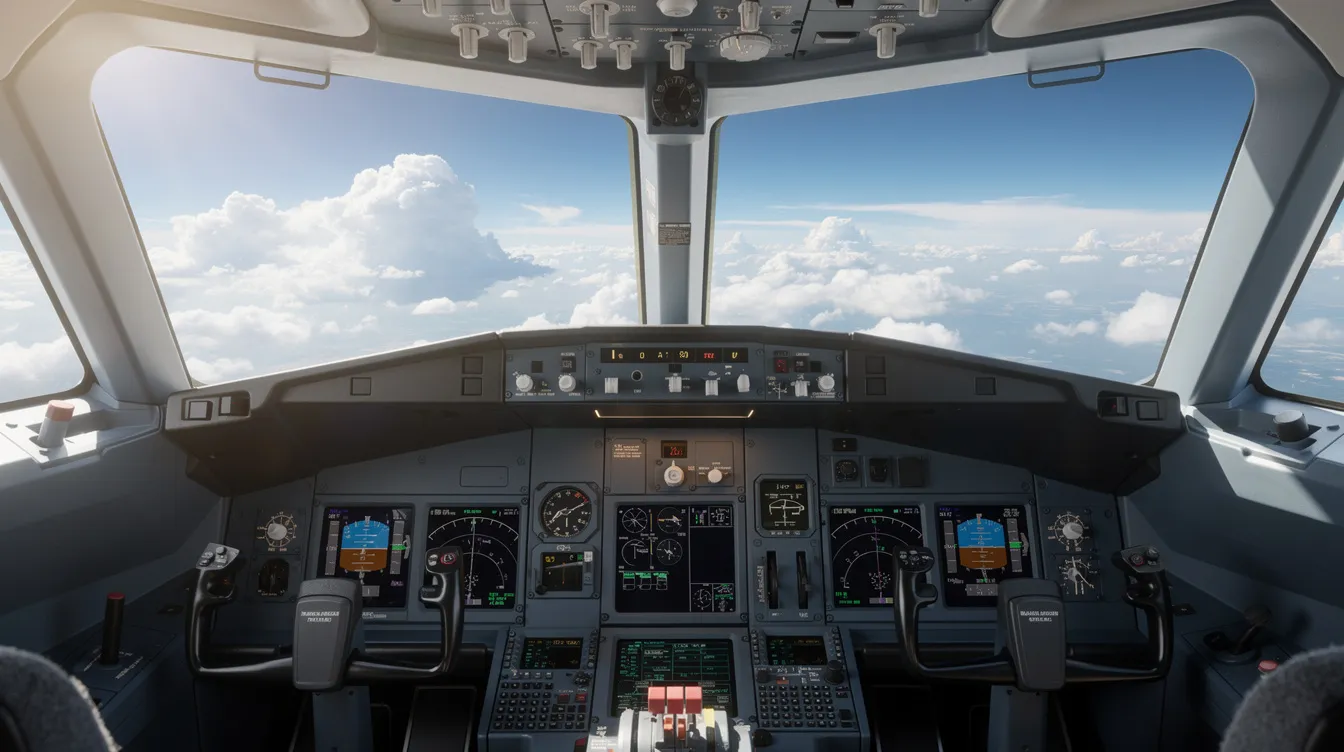
Cockpit: The flight deck features six CRT displays and allows common pilot type rating with the Boeing 767. This advanced cockpit design reduces pilot training costs substantially. The autopilot and flight management systems were among the most capable available when the 757 entered service.
Key Performance Figures:
|
Metric |
757-200 |
757-300 |
|---|---|---|
|
Maximum range |
3,900 nmi |
3,395 nmi |
|
Cruise speed |
Mach 0.80 |
Mach 0.80 |
|
MTOW |
255,000 lb |
273,000 lb |
|
Takeoff run (MTOW, sea level) |
~6,800 ft |
~8,550 ft |
|
Service ceiling |
~42,650 ft |
~42,000 ft |
The 757 can operate from airports with shorter runways and at higher altitudes, a capability that set it apart from many contemporary and even newer narrow bodies.
Pilot Perspective: Handling Qualities and Flight Deck Experience
Ask any group of airline pilots to name their favorite aircraft, and the Boeing 757 consistently ranks at or near the top. This isn't nostalgia - it's a response to genuinely exceptional handling qualities and performance.
The high thrust-to-weight ratio gives the 757 strong acceleration on the ground and steep climb capability that pilots describe as "rocket-like." When lightly loaded on shorter sectors, climb rates of 3,000 to 4,500 feet per minute are common, prompting many 757 captains to comment that takeoff "feels like a launch." The engines deliver more thrust than the airframe strictly needs for most missions, giving crew members confidence and generous margins in demanding situations.
On approach, the 757 remains stable and predictable. Pilots praise its precise control feel through the ailerons and elevators, effective spoilers and autobrakes, and the confidence it inspires during crosswinds, wet runway landings, and mountainous terrain departures. The cockpit offers excellent forward visibility thanks to the nose geometry, and its logical layout inherited from the 767 development program feels intuitive.
Many 757 crew members note that the aircraft strikes an ideal balance: enough automation to reduce workload on long overwater flights, but enough manual "feel" to keep the pilot genuinely engaged.
Unlike some newer, more heavily automated jets that can feel "numb" to pilot inputs, the 757 preserves a direct, tactile connection between the crew and the aircraft. This "Boeing feel" - where control forces provide honest feedback about airspeed, attitude, and loading - is a major reason pilots prefer the 757 for demanding operations. Whether departing a hot and high conditions airport in the American West or executing a go-around in gusty North Atlantic weather, the 757 responds exactly as its pilots expect.
Cabin Layout, Passenger Experience, and Amenities
The 757 typically uses a 3-3 single-aisle cabin layout with a fuselage width that yields a seat width generally between 17 and 18 inches, depending on the airline's seat model. Configurations range from high-density charter seating to premium long-haul arrangements featuring lie-flat or recliner seats.
Major operators like Delta Air Lines have offered multiple cabin classes on their 757 fleet:
-
Premium cabins (Delta First or Delta One) with wider seats and enhanced service
-
Extra-legroom economy (Delta Comfort+) with additional pitch
-
Standard economy seating
On modernized 757 cabins, passengers can find Wi-Fi connectivity, in-seat power via USB and AC outlets, overhead and seatback entertainment screens, and updated LED cabin lighting. The extent of these amenities varies significantly by airline and retrofit program.
Some Boeing 757 200 aircraft configured for longer intercontinental routes feature lie-flat business-class seats, enhanced galleys, improved lavatory layouts, and extra fuel capacity. Others focus on short-haul efficiency with higher seat density. Passengers booking on airlines like Delta or Shanghai airlines that have operated the 757 can check published seat maps for exit rows, preferred seating zones, galley positions, and lavatory locations to make informed seat choices before their flight.
Range, Routes, and Intercontinental Capabilities
The Boeing 757 200's range and performance bridged the gap between traditional short-haul jets and wide-body long-haul aircraft. With a maximum range of approximately 3,900 nautical miles depending on configuration and loading, it opened routes that were previously uneconomical with either smaller jets or oversized widebodies.
This capability made the 757 ideal to fly intercontinental routes, particularly early transatlantic routes between U.S. East Coast cities and Western Europe. Concrete examples include:
-
New York–Shannon and Newark–Birmingham with U.S. carriers
-
Boston–Reykjavik with Icelandair
-
European airlines using 757s for medium-range service into the Middle East and North Africa
The 757's strong takeoff performance enabled these long routes from constrained or noise-sensitive airports like London Heathrow and various high-altitude or short runway airports where wide-bodies were impractical. Its ability to operate from shorter runways while still carrying a full fuel and passenger load gave it an operational advantage that few other narrowbodies could match.
The Boeing 757 was one of the first aircraft to receive ETOPS certification, with 120- and 180-minute approvals granted by the early 1990s. This allowed 757s to cross the North Atlantic and other oceanic regions safely with twin-engine redundancy and stringent maintenance procedures, cementing the aircraft's role on overwater intercontinental routes.

Airline Operators and Global Service History
More than 1,050 Boeing 757s were delivered to approximately 55 customers, and the type served airlines on every inhabited continent. The Boeing 757 is heavily utilized in transcontinental and transatlantic routes across its operational history.
Early adopters: Eastern Air Lines served as the first carrier and launch customer, while british airways deployed the type on UK domestic shuttle routes. Both airlines helped prove the 757's economics and reliability in high-frequency operations.
Major U.S. fleets: American airlines operated a substantial fleet of 757s before ending operations with the type in 2020. United airlines flew the 757 extensively on both domestic and transatlantic services. Delta air lines built one of the largest 757 fleets of any airline and remains among the most significant passenger operators into the mid-2020s.
International operators: Shanghai airlines and other Chinese carriers employed 757s on domestic trunk routes and select international segments. European carriers like Icelandair, Condor, and various charter airlines used the type for medium- and long-haul operations across europe and beyond.
As newer 737 and A320 family aircraft took over many short-haul roles, operators shifted many 757-200s from passenger to cargo service or secondary markets, while the 757 continued flying niche long-thin routes that newer narrowbodies couldn't easily serve.
Approximate mid-2020s fleet status:
|
Operator |
Role |
Status |
|---|---|---|
|
Delta Air Lines |
Passenger |
Active, one of largest remaining fleets |
|
FedEx Express |
Cargo |
Active, large fleet |
|
UPS Airlines |
Cargo |
Active |
|
Icelandair |
Passenger |
Active on transatlantic |
|
British Airways |
Retired |
Ended 757 ops in 2010 |
|
American Airlines |
Retired |
Ended 757 ops in 2020 |
Cargo, Government, and VIP Roles
The 757's robust structure, large fuselage cross-section, and efficient engines made it an attractive platform for freighter and special-mission use after passenger service.
Factory Freighters: The 757-200PF is a dedicated freighter variant equipped with a large main-deck cargo door compatible with standard ULD containers and pallets. With a revenue payload capacity of up to 87,700 pounds and range of approximately 3,150 nautical miles when fully loaded, it serves express freight networks where volume exceeds smaller freighter capacity but doesn't justify a widebody.
Conversions: The 757-200SF special freighter conversion transforms retired passenger airframes for cargo duty. The conversion process involves structural reinforcement, door installation, and window removal. This has become a significant secondary market for the type.
Major cargo operators including ups airlines, FedEx Express, and DHL rely on the 757 for overnight express and medium-haul cargo networks across North America and europe.
Government and Military: Several nations operate 757s as VIP transports for heads of state and military commanders, troop transports, and special communications aircraft. The U.S. government maintains 757-based platforms for various missions.
Corporate/Charter: High-end conversions feature luxury interiors with conference areas, private suites, and extended-range fuel modifications. The 757's combination of cabin volume, range, and runway performance makes it an appealing long-range business jet platform for operators who need to reach smaller airfields.

Market Performance, Production End, and Replacement Concepts
The 757's sales trajectory followed a distinct pattern. Strong initial interest in the early 1980s gave way to a mid-decade slowdown, followed by a resurgence in the late 1980s and 1990s driven by hub congestion and tightening noise regulations. Production peaked at 100 aircraft annually in the early 1990s.
By the early 2000s, orders tailed off as airlines increasingly favored smaller, more flexible 737 and A320 family jets. The large installed base of 757-200s also satisfied most capacity needs, reducing demand for new-build airframes.
Boeing studied improved versions, including a longer-range 757-200X and potential re-engined models, but none advanced to production. The economics simply didn't justify a major investment in a niche that was perceived as shrinking.
Boeing announced the decision to end 757 production in October 2003. The final aircraft rolled off the Renton line in late 2004, and the last 757 was delivered on November 28, 2005 - a 757-200 for Shanghai Airlines. In total, Boeing produced 1,050 Boeing 757s during its production run.
Airlines have since filled the "757 gap" with combinations of 737 max variants, Airbus A321neo (including long-range LR and XLR versions), and Boeing 767 or 787 on thicker routes. However, no direct one-for-one replacement fully matches the 757's unique combination of runway performance, range, and payload capacity. Despite ending production, the 757 is still valued for its performance and versatility.
Safety Record, Accidents, and Wake Turbulence
The Boeing 757's overall safety record is comparable to other aircraft of its generation. As with any type that has accumulated decades of high-utilization service, incidents and accidents have occurred, but the airframe's fundamental design integrity has never been seriously questioned.
As of November 2023, the Boeing 757 has 47 aviation occurrences on record. There have been ten hull-loss accidents involving the Boeing 757. The 757 has been involved in 12 hijackings resulting in fatalities. Most serious accidents stemmed from human factors, adverse weather, or external events rather than intrinsic design flaws.
Wake Turbulence: A notable safety legacy involves the 757's wake vortex characteristics. Despite being classified as a "large" rather than "heavy" aircraft, the 757 generates wake turbulence comparable to much larger jets, particularly during slow, clean-configuration flight. Wake turbulence from 757s caused three general aviation crashes, resulting in fatalities when light aircraft encountered 757 wake vortices on final approach.
These incidents prompted regulatory action. The FAA increased separation requirements for 757s after incidents, creating specific spacing rules that recognize the type's unique vortex strength. This made the 757 one of few aircraft to trigger wake-turbulence rule changes.
Continuous safety improvements over the years - including updated operating procedures, enhanced pilot training, and revised air traffic control separation standards - have mitigated identified risks. The type remains fully certificated and trusted in commercial service worldwide.
Specifications of the Boeing 757-200
This section provides a concise reference for a typical boeing 757 200, the variant most commonly encountered by passengers and operators.
Dimensions: The aircraft has an overall length of approximately 155 feet (47.3 m), a wingspan of about 125 feet (38.1 m) without winglets, and a height of roughly 44 feet 6 inches. The cabin width of approximately 11 feet 7 inches (3.54 m) accommodates six-abreast seating with a center aisle, providing seat width comparable to other single-aisle jets.
Performance: The 757-200 has a maximum takeoff weight of 255,000 pounds and a maximum cruising speed of Mach 0.80. Its maximum range of 3,900 nautical miles enables both domestic and transatlantic operations. Service ceiling reaches approximately 42,650 feet.
Seating: Two-class layouts typically accommodate 178–200 passengers, while high-density single-class configurations seat up to 239 passengers. Seat pitch ranges from about 30 inches in economy to 38+ inches in premium cabins.
Optional Equipment: Blended winglet retrofits from Aviation Partners can improve fuel efficiency by an estimated 5% and add roughly 200 nautical miles of range. Extended-range fuel tanks and upgraded avionics packages are also available, modifying both performance and operational capability. Airlines have equipped many 757s with these modifications to extend operational life and improve economics. The auxiliary power unit provides ground power and air conditioning independent of the main engines, supporting efficient turnarounds at airports without extensive ground infrastructure.
Legacy and Impact on Modern Aviation
The Boeing 757 shaped airline networks by enabling thinner long-haul routes, efficient hub-and-spoke operations, and reliable service into performance-challenging airports. Before the 757, many city pairs between the U.S. East Coast and europe simply couldn't support nonstop narrowbody service. The 757 changed that calculus entirely.
Its influence extends to current airline strategies. The concept of using single-aisle jets to fly intercontinental routes - now common with the A321neo LR/XLR - traces directly back to the 757's pioneering transatlantic operations. Every airline that flies a narrowbody across an ocean owes a conceptual debt to the plans Boeing developed in the late 1970s.
The 757 carries a dual legacy. Passengers remember its powerful, confident feel on takeoff. Pilots remember it as a well-engineered, satisfying aircraft to operate - the kind of machine that made going to work genuinely enjoyable.
Despite ending production two decades ago, the 757 remains in demand in cargo and secondary passenger markets precisely because its unique mix of payload, range, and runway performance has proven difficult to fully replicate. The aircraft's design lessons and operational patterns continue to inform fleet planning and route development decisions well into the 2020s.

Frequently Asked Questions
The following questions address common topics about the Boeing 757 that aren't fully covered elsewhere in this article. Answers are aimed at both aviation enthusiasts and general travelers and kept concise and fact-focused.
Is the Boeing 757 still safe to fly today?
Yes. The 757 remains fully certificated and subject to the same maintenance and regulatory oversight as newer aircraft. Aging-aircraft inspection programs, structural checks, and system upgrades mandated by the faa keep the fleet airworthy. Safety performance depends more on operator maintenance practices and procedures than on an aircraft's calendar age. Major carriers operating the 757 follow strict safety standards identical to those applied to their newest fleet types, and the aircraft continues to operate safely with both passenger airlines and cargo carriers worldwide.
Why do some pilots say the 757 is their favorite aircraft?
Pilots appreciate the 757's powerful engines and high thrust-to-weight ratio, which deliver strong climb performance and responsive acceleration. The controls provide honest, tactile feedback that makes the aircraft genuinely enjoyable to hand-fly. Cockpit ergonomics are excellent, with good forward visibility and a logical instrument layout. Reliable systems and generous performance margins in challenging conditions - from short runway departures to gusty crosswind landings - give pilots confidence. Despite being older than current designs, many pilots prefer the 757's handling qualities over some newer, more heavily automated jets that can feel less engaging to operate.
How does flying on a 757 compare to newer narrow-body jets like the 737 MAX or A321neo?
Passengers will notice similar cabin width and 3-3 seating. Cabin freshness, noise levels, and in-flight entertainment quality depend more on airline refurbishment programs than on aircraft type. The 757 often feels noticeably powerful on takeoff due to its high thrust-to-weight ratio, whereas newer jets tend to be somewhat quieter and slightly more fuel-efficient. From a safety and comfort perspective, a well-maintained 757 with modernized interiors - including Wi-Fi, power outlets, and updated seating - offers a comparable experience to flying on newer narrowbodies.
Will there ever be a direct replacement for the Boeing 757?
No single current model exactly matches the 757's combination of range, payload, and short-runway performance, which is why airlines use different types to cover its former missions. The Airbus A321neo LR/XLR and Boeing 737 max variants handle many of the same routes, while widebodies like the 787 serve higher-demand long-haul services. Boeing has studied "middle-of-the-market" concepts that would slot between the 737 and 787, but as of the mid-2020s no clean-sheet 757 successor has entered production. The unique niche the 757 carved out may ultimately be served by a combination of aircraft rather than a single direct replacement.


