

Grumman OV-1 Mohawk: History, Design, and Legacy of the U.S. Army's Battlefield Scout
The Grumman OV 1 mohawk is one of the most distinctive and least celebrated military aircraft of the Cold War era. Built as a twin-turboprop battlefield surveillance airplane for the United States Army, it flew operational missions across three continents and four decades before quietly fading from service. This article covers everything from its origins and design to its combat record, technical specs, and where you can see a preserved mohawk today.
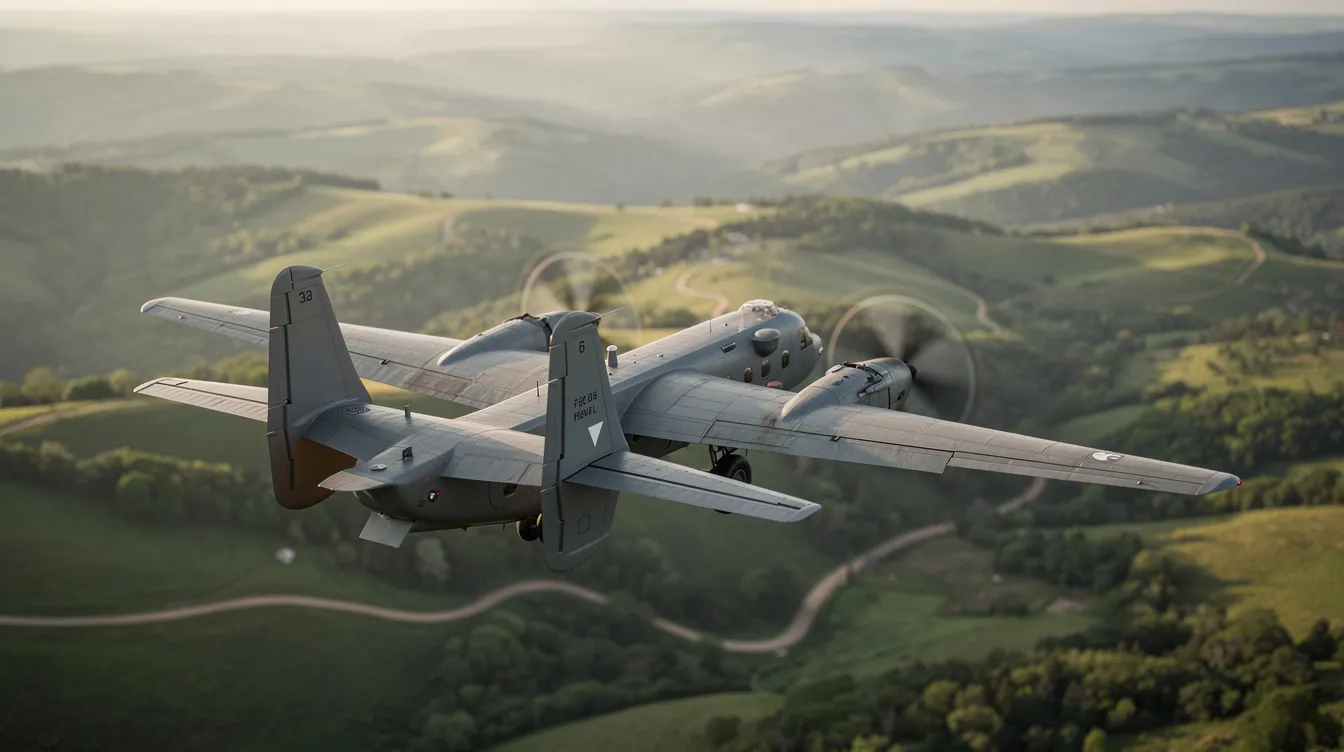
Aircraft Snapshot
-
The grumman OV 1 mohawk was a twin-turboprop reconnaissance aircraft designed specifically for the us army, serving from the late 1950s until its retirement in 1996. About 380 OV-1 Mohawks were built between 1959 and 1970.
-
It holds the distinction of being the only fixed wing aircraft purpose-built for combat and observation duties for the United States Army after the establishment of the air force in 1947. It was designed for battlefield reconnaissance and surveillance across multiple theaters.
-
The OV 1 mohawk was used in various conflicts, including vietnam, Korea, and Operation Desert Storm, providing real-time intelligence and supporting ground forces with advanced sensors.
-
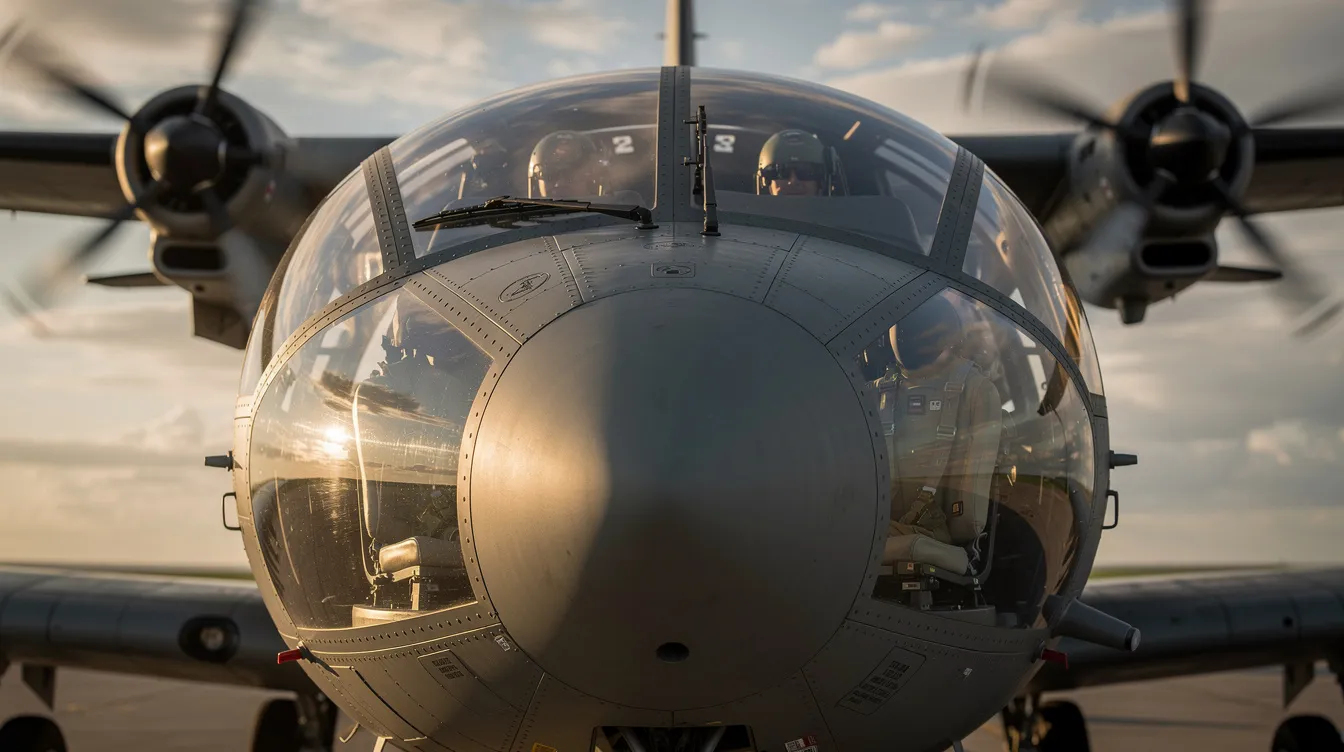
Its distinctive features included a triple-tail fin arrangement, side by side seating for two crew members in a "bug-eyed" cockpit, and sensor systems like side-looking airborne radar and infrared imaging.
-
Several airframes survive today in museums and private collections, and a handful remain airworthy as civilian warbirds.
Origins and Development of the Grumman OV-1
The Korean War exposed serious gaps in the United States Army's ability to observe the battlefield from the air. Liaison planes like the L-19 Bird Dog were slow, vulnerable, and lacked sensors for night or bad-weather operations. By the mid-1950s, the army needed something faster, tougher, and smarter.
In 1956, the us army and the marine corps jointly issued a requirement for a two-seat, twin-engine observation aircraft capable of day and night, all-weather operations from unimproved airstrips. Grumman Aircraft Engineering Corporation, known as the "Iron Works" for building rugged navy carrier planes, submitted its G-134 design and won the contract.
The Marines dropped out of the program before the prototype phase, driven by doctrinal disagreements over armed fixed wing aircraft for ground support roles. This left the mohawk as a purely army program. Grumman pressed ahead, and the first flight of the YAO-1 prototype took place on April 14, 1959. Production deliveries began shortly after, and the first operational Mohawks reached army units in Europe by mid-1961, with initial deployment to Vietnam following in September 1962.
Design and Airframe Characteristics
The ov 1 mohawk was a high-wing, twin-turboprop STOL airplane with a silhouette unlike anything else in the army inventory. Its triple vertical tail fins improved stability and control at low speeds and in the turbulent air common during terrain-hugging reconnaissance runs. The OV-1 Mohawk was designed for short-takeoff-and-landing operations, allowing it to use rough forward strips that would ground most conventional aircraft.
Power came from two Lycoming T53-series turboprop engines mounted in outward-canted nacelles on the wings. Early models used the T53-L-7 producing roughly 1,150 shaft horsepower, while later variants like the OV-1D upgraded to the T53-L-701 at approximately 1,400 shp. Single-engine handling was reliable enough that a damaged aircraft could limp home on one powerplant.
The cockpit featured side by side seating for a pilot and an observer or imagery specialist. The OV-1's cockpit has large, bulging side windows - the famous "bug-eyed" look - designed to give both crew members an unobstructed view of the ground below. The Mohawk was heavily armored to protect its crew during operations, with armored seats, bullet-resistant windshields, and hardened floor panels to absorb small arms fire from below.
Structurally, the airframe was built from the outset to accept different sensor pallets without major redesign. Underwing hard points on armed versions like the JOV-1A could carry rockets and gun pods, though the primary mission was always reconnaissance rather than attack aircraft duties.
Sensor Suites and Surveillance Technology (SLAR, IR, and Cameras)
The Grumman OV was built around its sensors rather than its weapons. From the earliest OV-1A models, a panoramic camera and vertical camera installation allowed daylight photography for mapping and battle damage assessment. Missions were planned around specific photo runs over areas of interest.
The OV-1B introduced the SLAR system - a side-looking airborne radar housed in an elongated slar pod mounted along the right side of the fuselage. The OV-1 Mohawk can detect moving targets using its radar system, picking up vehicles, boats, and terrain changes even under jungle canopy or in darkness. SLAR equipped mohawks flew critical SLAR mission profiles along the Ho Chi Minh Trail, where they tracked truck convoys moving supplies south.
The OV-1C brought infrared sensors into the mix for ir mission roles, detecting heat signatures from vehicle engines, cooking fires, and recently used trails. This capability proved devastating against concealed enemy positions, especially at night. It provided real-time intelligence during the Vietnam War and other conflicts by relaying sensor data to ground commanders for immediate action.
The OV-1D combined all these systems into one modular platform. Crews could swap between SLAR, IR, and photographic configurations in roughly one hour, making each aircraft flexible enough to cover multiple mission types. Data exploitation ranged from SLAR printouts and live displays to film canisters processed after landing, with intelligence sections using the output for artillery targeting and troop movement analysis.
Variants of the OV-1 Mohawk (OV-1A, OV-1B, OV-1C, OV-1D)
The OV 1 family evolved through several variants, each tailored to a specific reconnaissance role while sharing a common airframe built to support the army on the battlefield.
The OV-1A was the baseline day-visual and photographic reconnaissance model. Approximately 64 were built, equipped with vertical and panoramic cameras for daylight observation. Some airframes were modified as JOV-1A armed conversions, fitted with underwing hard points carrying rocket pods and .50-caliber gun pods - making them a limited attack aircraft for self-defense in Vietnam.
The OV-1B was the dedicated SLAR platform, carrying the prominent radar pod for all-weather, day-or-night surveillance. Around 101 were produced, and they flew extensively over Vietnam and european service theaters, complementing variants that lacked side-looking radar.
The ov 1c was the first version equipped with infrared systems, giving the army a nocturnal and bad-weather reconnaissance capability. Thermal imaging allowed it to find guerrilla fighters and hidden camps through triple-canopy jungle or total darkness. Production and conversions totaled roughly 133 airframes.
The OV-1D represented the final, most capable production standard. It combined SLAR, IR, cameras, and modernized avionics into a multi-sensor platform with upgraded T53-L-701 engines. About 37 were newly built, with many earlier airframes converted to D standard. This variant became the mainstay through the type's later service life.
Export use was minimal. The Mohawk remained predominantly a United States Army platform, though Argentina later operated a small fleet.
Operational History: Vietnam, Korea, Europe, and the Gulf War
The ov 1 mohawk flew with active us army units and the georgia army national guard across multiple theaters from the early 1960s until 1996. Its vietnam and european service spanned the most intense decades of the Cold War.
The OV-1 Mohawk was deployed to Vietnam in September 1962 with the 23rd Special Warfare Aviation Detachment, initially in an evaluation role. Mohawks quickly became integral to battlefield surveillance, flying low-level reconnaissance over the Ho Chi Minh Trail and contested areas, supporting artillery spotting, and feeding intelligence to ground commanders. Sixty-five OV-1 aircraft were lost during the Vietnam War to a combination of ground fire and operational causes. Separately, 65 OV-1 Mohawks were lost to accidents during the Vietnam War - a figure that reflects the hazards of sustained low-altitude flying in hostile conditions. One of the most remarkable episodes came when Captain Ken Lee, flying an armed JOV-1A, shot down a North Vietnamese MiG-17 using rockets and a gun pod - the only aerial victory ever credited to a US Army fixed wing aircraft.
In south korea, Mohawks patrolled the Demilitarized Zone from the 1960s through 1996, using SLAR and IR to detect infiltrators and unauthorized vehicle movements. The OV-1 Mohawk was retired from Korea in September 1996, marking the end of its Korean service.
In Europe, Mohawk units monitored Warsaw Pact activities along the inner-German border, flying from bases near Mannheim beginning in 1961. They trained for rapid battlefield reconnaissance in the event of a NATO–Warsaw Pact conflict.
During the gulf war, the OV-1 Mohawk flew reconnaissance missions during Operation Desert Storm, tracking Iraqi vehicle columns and electronic emitters with updated SLAR systems. No Mohawk combat losses were reported during Desert Storm.
The Army National Guard operated thirteen OV-1Bs starting in 1972, with units in Georgia and Oregon taking on surveillance and readiness missions. These planes gradually transitioned out as newer aircraft and newer systems entered service.
Life in the Cockpit: Crews, Missions, and Challenges
Each Mohawk typically flew with two crew members: a pilot and an enlisted observer or imagery specialist. Their teamwork was the backbone of every operational mission. The observer handled sensor operation, image interpretation, and communications while the pilot navigated at low altitude under threat.
A typical flight began with an intelligence brief covering the area of interest and the sensor needed. After take off from a forward strip, the crew would fly sensor runs - camera passes by day, IR scans at night, SLAR swaths over canopy-covered terrain. On return, film was processed and printouts analyzed for immediate use by ground commanders.
The cockpit was cramped and, before air conditioning upgrades, brutally hot. Crews endured long hours of vibration and turbulence at low altitude while exposed to small arms fire and sometimes anti-aircraft artillery. Survivability features - armored seats, redundant systems, Martin-Baker ejection seats, and the airplane's ability to fly on one engine - saved many lives. Numerous Mohawks returned to base with significant battle damage, including large-caliber bullet holes through wings and fuselage.
The psychological weight was real. Flying unarmed or lightly armed over heavily defended territory, crews relied on speed, low altitude, and the aircraft's ruggedness. Paul Pefley and other former mohawk pilots have recalled the intensity of missions where the only defense was the airplane itself.
Retirement, Replacement, and the Mohawk's Legacy
The U.S. Army replaced the Mohawk with modern reconnaissance aircraft and unmanned aerial vehicles as sensor technology advanced beyond what a manned turboprop could efficiently deliver. Larger platforms like the E-8 Joint STARS offered wide-area ground surveillance, while the militarized version of the De Havilland Dash-7 (EO-5C) took over tactical STOL reconnaissance.
The ov 1 mohawk retired from Europe in 1992 and finally from south korea in September 1996. Army National Guard units in the United States stood down that same year, ending nearly four decades of continuous service.
The mohawk's legacy is that of an "unsung hero." It was the only fixed wing aircraft designed solely for the army in the post-World War II era, and its modular sensor architecture pioneered concepts - real-time ground surveillance, sensor-centric airframe design, quick-swap mission equipment - that are now standard in modern ISR doctrine. Every drone orbiting a battlefield today owes something to the philosophy the grumman ov 1 embodied.
Preserved OV-1 Mohawks and Museum Displays
Although the Mohawk left active service in the 1990s, dozens of airframes survive in museums and static displays across the United States. The american wings air museum in Minnesota holds around a dozen Mohawks, making it one of the largest collections of the type anywhere.
Other notable display locations include the US Army Aviation Museum at Fort Novosel, the pima air and space museum in Arizona, and the fort worth aviation museum in Texas. Fort Hood in Texas also hosted static displays during the type's operational era. Museum volunteers and former crew members maintain these aircraft with attention to historically accurate paint schemes, sensor bays, and cockpit details.
Visitors can typically see cockpit interiors with the distinctive bulging windows, SLAR pod mounts, camera installations, and interpretive panels explaining operational missions. Some museums feature veteran docents who share firsthand stories. A small number of airframes remain airworthy - mohawk technologies operates retired OV-1Ds for sensor integration and demonstration work, and a few privately owned warbirds appear at airshows.
Tragically, on November 1, 2019, an OV-1D crashed in Florida, killing the pilot - a reminder that even retired warbirds carry real risks.
Specifications of the OV-1D Mohawk
The OV-1D represented the most capable production variant. Key specifications based on published sources:
|
Parameter |
Value |
|---|---|
|
Wingspan |
~42 ft |
|
Length |
~41 ft |
|
Height |
~12 ft 8 in |
|
Empty weight |
~10,400 lb |
|
Normal take off weight |
~15,000 lb |
|
Max takeoff weight |
~17,800 lb (overloaded) |
|
Engines |
2× Lycoming T53-L-701 (~1,400 shp each) |
|
Maximum speed |
~308 mph |
|
Cruise speed |
~250–300 mph |
|
Stall speed |
~70–80 mph (clean) |
|
Service ceiling |
~25,000 ft |
|
Range (internal fuel powerplant) |
~944–1,100 miles |
|
Landing run |
Short (STOL-capable) |
|
Fuel capacity |
Standard turbine fuel; sufficient for multi-hour missions |
|
Crew |
2 (pilot + observer) |
|
Armament |
Limited; underwing hard points on armed variants for rockets/gun pods |
|
Propeller diameter performance maximum speed |
Three-blade props optimized for STOL and cruise efficiency |
The OV-1D's sensor fit included combined SLAR, IR, and photographic systems. Configurations varied by unit and mission, but the modular design allowed rapid changeover. The helicopter may have dominated army aviation rosters, but the OV-1D filled a niche no rotary-wing aircraft could match in speed and range.
On January 14, 1981, an OV-1D crashed during a maintenance test flight. The 1981 crash was caused by a malfunction in the Inertial Navigation System, highlighting the complexity of the avionics that made the D-model so capable.
Frequently Asked Questions about the Grumman OV-1 Mohawk
Why did the US Army operate its own fixed-wing aircraft like the OV-1 instead of relying entirely on the Air Force?
After the Key West Agreement of 1948, the army was restricted from owning fixed-wing combat aircraft but retained the right to operate observation and reconnaissance types. The OV-1 filled this niche perfectly - it was built for battlefield surveillance, artillery spotting, and tactical intelligence rather than air superiority or strategic bombing. Its STOL capability and ability to operate from forward strips made it far more responsive to ground commanders than air force assets flying from rear bases.
How does the OV-1 compare to modern unmanned aerial vehicles used for surveillance?
Modern UAVs offer longer endurance, risk no crew lives, and carry increasingly sophisticated sensors. However, the mohawk offered immediate human judgment in the cockpit, robust performance in poor weather, and the ability to operate independently of satellite links or remote control infrastructure. Many ISR concepts the OV-1 pioneered - persistent surveillance, real-time imaging, modular sensors - are now standard in drone programs. The planes of that era laid the doctrinal groundwork.
Are any OV-1 Mohawks still flying today?
A small number remain airworthy as civilian-registered warbirds. Mohawk Technologies operates retired OV-1Ds for sensor research and demonstration. Occasional airshow appearances keep the type visible, though flightworthy examples are increasingly rare. NASA's Earth Science Division has also previously flew OV-1 airframes for research purposes.
What does the designation "OV" stand for?
"O" stands for "Observation" and "V" indicates a heavier-than-air fixed-wing aircraft under the 1962 United States Tri-Service designation system. Before 1962, the Mohawk carried the AO-1 designation. The israeli air force and other nations used different designation conventions, but the OV prefix became synonymous with the Mohawk in American service.
Was the OV-1 ever used in a ground-attack role?
Officially, the mohawk was a reconnaissance platform. However, JOV-1A and JOV-1C conversions carried underwing rockets and gun pods for limited light attack capability in Vietnam. These armed conversions were controversial under interservice agreements, and the army ultimately stayed focused on the aircraft's surveillance mission. Captain Ken Lee's aerial victory against a MiG-17 remains the only air-to-air kill by a US Army fixed wing aircraft - an anomaly rather than a doctrine.


